Rachel was a friend of the Journey of Hope...from Violence to Healing, the National Coalition to Abolish the Death Penalty, Murder Victims Families for Reconciliation, Murder Victim Families for Human Rights and many others from around the country and around the world.
-Don't Kill In Our Name: Families of Murder Victims Speak Out Against the Death Penalty- and -Capital Consequences: Families of the Condemned Tell Their Stories- are two of Rachel's great works.
Please read the following from Rachel's family.
Peace,
Bill Pelke
Rachel King, 1963 - 2008
Dear friends,
Our inimitable Rachel King passed tonight at quarter to seven p.m. She died in her home in Wayne, Maine, overlooking the shores of Dexter Pond. Rachel grew up in Wayne, and later built a second home there with her husband, Richard McAlee. Her last moments were spent surrounded by friends and family, holding her hand and telling her how much they love her. Richard, her mother Jill, father Charlie, step-daughter Julia, and friends Barb Brink, Bill Murray, Mary Jane Cavallo, and Monique Mitchell were all present.
A memorial service will be held at Wayne Community Church, where Rachel and Richard married, this Sunday afternoon. Any friends able to travel to Maine are welcome. A second memorial service will be held in Washington, D. C. within the next few weeks. We will send details as they become available.
Thank you from the bottom of our hearts for the love, prayers, cards, and thoughts you have shared with us and Rachel through her journey with cancer, and particularly your outreach over the past weeks. Almost all messages you send through email, mail, or phone were able to be shared with her, and we know they brought her great comfort; any messages that did not reach her directly will be shared with her immediate family. Your responses to Rachel over the past weeks have been truly overwhelming; they are a tribute to what an amazing and far-reaching life she led. We were all so blessed to be touched by her.
You can reach the family by email through her step-daughter Lauren at lmcalee@gmail.com , or by mail through her mother Jill Howes at 282 Narrows Pond Rd., Winthrop, ME 04364. If you wish to send a memorial, please send donations to the National Coalition to Abolish the Death Penalty in lieu of flowers.
With great love,
Richard McAlee, Jill Howes, Livia McAlee, Julia McAlee, and Lauren McAlee
Monday, August 25, 2008

Updates on Sister Helen and Interfaith Gathering
 Photo of Sister Helen
 Only Democratic Convention Interfaith Event of it's kind...
In 2004, there was one interfaith lunch at the Democratic gala in Boston.
Death Penalty Opponent Sister Helen Prejean to be at ASU August 28
The death penalty in the United States "says that we are still wedded to violence as a way to solve social problems.
Rev. Leah D. Daughtry Convention CEO - posted the following... August 24, 2008 (Perhaps a Republican Abolitionist will also be represented at one of their coming televised events as we know has been the case in some areas of the US. If so, please let us know...)
"Democrats have been, are and will continue to be people of faith - and this interfaith gathering is proof of that. As Convention CEO and a pastor myself, I am incredibly proud that these esteemed leaders from the faith community (are) with us to celebrate this historic occasion and honor the diverse faith traditions inside the Democratic Party."
The Democratic National Convention Committee (hosted) the first-ever Democratic National Convention interfaith gathering, the first official event for the 2008 Convention. An interfaith gathering (was) be held at 2:00 pm MT, Sunday, August 24 at the Wells Fargo Theater, inside the Colorado Convention Center in Denver, Colo.
Bishop Charles E. Blake, presiding prelate of the Church of God In Christ, Inc. and pastor at the West Angeles Church of God in Christ; Dr. Ingrid Mattson, president of the Islamic Society of North America; Sister Helen Prejean, social activist and author of "Dead Man Walking;" and Rabbi Tzvi Weinreb, executive vice president of the Orthodox Union, (led) the event.
Sunday, August 24, 2008
More Items on Jeff Wood Case
 Texas Killing Bed
Jeff Wood received a last minute stay before a scheduled execution. Here are more items published on this case: From NYTimes August 22, 2008--
Federal Judge Sharply Criticizes Texas System in Ordering Stay of Execution
Jeff Wood’s execution was stayed with only hours remaining by U.S. District Court Judge Orlando Garcia of San Antonio. The judge chastised the Texas courts for their refusal last week to hire mental health experts to determine whether Wood (pictured) was insane or appoint a lawyer to represent him for a competency hearing. The state courts had ruled that Wood had to show he was insane before they would appoint a lawyer and a psychologist to help prove he was insane. Judge Garcia's opinion said such a system is absurd, “With all due respect, a system that requires an insane person to first make ‘a substantial showing’ of his own lack of mental capacity without the assistance of counsel or a mental health expert, in order to obtain such assistance is, by definition, an insane system.”
In their appeal, Wood’s attorneys argued he is too delusional to understand why he is to die. Attorney Scott Sullivan said, “He will become delusional and deny the apparent reality right in front of him,” adding that Wood believes he is the victim of a Freemason conspiracy. In granting the stay, the court noted that Wood's bizarre statements at his trial and in prison, “at least arguably suggest the petitioner lacks a rational understanding of the casual link between his role in his criminal offense and the reason he has been sentenced to death.”
Wood’s mental heath was severe enough that one jury found him incompetent to stand trial, and it was only after spending time in a mental hospital that he was found competent by a second jury. Evidence of his delusions, emotional problems, and mental health difficulties were never brought before the jury that sentenced him to death because he instructed his lawyers not to present any evidence on his behalf. Judge Garcia said that such decision-making was, “bizarre, seemingly paranoid and clearly suicidal.” Wood’s case has received significant attention as he was sentenced to death under Texas' “law of parties.” His partner in a robbery shot a victim in a gas station while Wood was outside in a car. It is rare for anyone to be executed in the U.S. who was not directly involved in an actual murder.
(J. McKinley, “Federal judge, chastising the Texas courts, orders a stay of execution,” New York Times, August 22, 2008). See Mental Illness and Crimes Punishable by Death.
++++++++++
Execution of mentally ill man put on hold in Texas (Also August 22, 2008)
WASHINGTON (AFP) — A US court on Thursday granted a stay of execution to a mentally ill Texas man who was set to die for his role in a murder-robbery, even though he did not pull the trigger.
"Today, the Federal District Court granted a stay of execution in the case of Jeff Wood to allow the court to consider compelling evidence that Jeff Wood is too mentally ill to be executed," said a statement by the defense lawyers.
The court "held that the Texas state courts have not carefully reviewed the question of Wood's competence and that a stay of execution is necessary to ensure that Wood's mental health issues are fully presented and considered by the courts."
Wood, 35, was convicted and sentenced to die for his role in the robbery and killing of a store manager, Kris Keeran, even though Wood was outside the building at the time of the killing.
According to Texas' "law of parties" statute, participants in a crime can be convicted even if they have no role in or advance knowledge that a killing is to take place.
Wood's partner in crime, Daniel Reneau, was executed in 2002 for the murder.
"At Reneau's trial, the prosecution had argued that Reneau was the person chiefly responsible for the crime and that Wood's role was secondary," the Death Penalty Information Center said.
The federal court intervened after the Texas Board of Pardons denied Wood's application for clemency on Wednesday. Prosecutors said they would not appeal.
In 1997, Wood was initially found incompetent to stand trial after a neuropsychologist said he had "a delusional system, an inability to grasp the reality surrounding the issues specific to this case, his role in it, in the crime," defense lawyers said in their statement.
However, Wood was later tried and convicted.
Wood's lawyers asked the governor of Texas to delay Wood's execution by one month, after he had been in solitary confinement on Death Row for 10 years, 23 hours a day, to evaluate his mental health.
In 1986, the Supreme Court effectively banned executing anyone too mentally ill to understand what was to happen to them and why. But it did not establish criteria for evaluating mental competency.
"If a person is only mentally ill and not incompetent, the decisions are less clear and are up to individual judgments by the governor or the jury," Richard Dieter, director of the Death Penalty Information center, told AFP.
"Mr. Wood suffers today from the same psychological and emotional impairments for which a jury found him incompetent to stand trial in 1997," his lawyers said.
"He has never received psychiatric or mental health care for these impairments," attorneys said, highlighting that his involvement in the robber was "because of his longstanding mental illness that allowed him to be easily manipulated by the principal actor, Daniel Reneau."
Texas is the top executioner in the United States, having conducted 413 executions over the last 30 years, out of a national total of 1,119 for that period.
It is also one of the few US states that permit capital punishment in a case involving conspiracy to murder, not murder itself.
Seven people were executed for conspiracy after 1976, when the death penalty was re-authorized in the United States, but Wood will be the first to die since 1996.
In right-leaning Texas, support for the death penalty and the state's tough "law-and-order" approach remains high, with advocates arguing the punishment is just, deters crime and provides comfort to victims' families.
NOTE: Find plenty more items published on Jeff Wood's case on "Prevention not Punishment" and Rick Halperin's Updates (Click right on these sites--see column to the right on this blogspot)
New Mexico Items Need Updating -- stay tuned...
Please pardon the delay while the bloggers here confer with NCADP, Longtime Abolitionists in New Mexico and other activists in New Mexico--in order to better provide updated, comprehensive, nationally-approved by NCADP overview of past, current and proposed future work in New Mexico...Thanks for tuning in and for your patience while we at The Journey of Hope try educate ourselves on abolition efforts in this state...Thanks also to all the sincere efforts of activists, lawyers and Journey members in New Mexico!
Saturday, August 23, 2008
Sister Helen Prejean, the Death Penalty, and the DNCC
 Sister Helen Prejean
Advance applause goes to the Democratic National Convention Committee for its decision to include Sister Helen Prejean author of Dead Man Walking in the historic interfaith service opening the 2008 Democratic Convention in Denver, USA on August 24th.
Whatever you think of the death penalty, Democrats have on this occasion avoided the interfaith milquetoast trap. Too often political officials select the blandest brands of religious officialdom for worship services--seeking a kind of spiritual good-house keeping seal of approval for their policies and platforms. In so doing politicians deprive themselves and society as a whole an important faith-based tradition:the prophetic pain-in-the-neck. The DNCC won't make that mistake.
On August 24th Sister Helen Prejean, long time Roman Catholic anti-death penalty social activist will join Bishop Charles E. Blake, prelate of the Church of God in Christ, Dr. Ingrid Maatson, President of the Islamic Society of North American, and Rabbi Tzvi Weinreb, executive vice president of the Orthodox Union in leading the first-ever interfaith service to open a convention--Republican or Democratic. Respected and learned religious leaders all, Sister Helen Prejean makes up in scripturally-sound social activism what she might lack in ecclesiatic ranking within her tradition's hierarchy.
Like secular anti-death penalty activists, Sister Helen's rationales for ending the death penalty include its racial and economic bias and the strong likelihood of wrongful executions. Another powerful argument grounded in Sister Helen's Roman Catholic faith is the "collateral" damage done by the death penalty on the wardens and corrections officials who are directly responsible for overseeing executions. What are the spiritual costs to men and women like Texas Warden, Jim Willett who from 1998-2001 oversaw 89 executions?
"There are times," Willet said in an award-winning NPR radio show Witness to an Execution, "when I'm standing there, watching those fluids flow and wonder whether what we are doing here is right. It is something I'll be thinking about for the rest of my life." The same program chronicled Fred Allen a member of the tie-down team in Texas' Wall Unit who after 120 executions had a mental breakdown and retired from his work.
Given continued popular support for the death penalty in large parts of the United States, it may not be surprising that both Presidential Candidates John McCain and Barack Obama have expressed their support for it. Let's hope both parties--not the Democrats alone--have the courage to engage diverse religious leaders faithful who will pose uncomfortable and untimely questions to their people and political leaders. In this case, Sister Helen Prejean's concerns about the spiritual impact of the DP on the humanity of those who implement it is an appropriate subject for a pre-convention interfaith service at the Democratic National Convention and the policy debates to follow.
Friday, August 22, 2008
Judge calls system "insane"
Taken from a press release of the Texas Defender Service
STAY OF EXECUTION GRANTED IN TEXAS DEATH PENALTY CASE OF MENTALLY-ILL INMATE WHO WAS NOT TRIGGERMAN
WOOD EXECUTION HALTED BASED ON TEXAS STATE COURTS FAILURE TO PROVIDE DUE PROCESS ON ISSUES RELATING TO WOOD'S MENTAL ILLNESS
Austin -- Today, the Federal District Court granted a stay of execution in the case of Jeff Wood to allow the court to consider compelling evidence that Jeff Wood is too mentally ill to be executed. The Court held that the Texas state courts have not carefully reviewed the question of Wood's competence and that a stay of execution is necessary to ensure that Wood's mental health issues are fully presented and considered by the courts. [...]
The Federal District Court authorized an attorney and the assistance of mental health experts, pointing out that the Texas state courts had not complied with the basic due process that the United States Supreme Court required in another Texas case - that of Scott Panetti, a mentally ill death row inmate with a 20 year history of schizophrenia, who was permitted to represent himself at trial dressed in a purple cowboy costume.
In its 20-page order, the Court stated, "With all due respect, a system that requires an insane person to first make "a substantial showing" of his own lack of mental capacity without the assistance of counsel or a mental health expert, in order to obtain such assistance is, by definition, an insane system."
Prosecutors have indicated they will not appeal today's decision. Yesterday, the Texas Board of Pardons and Paroles denied the application for clemency on a vote of 7-0 despite the mental health evidence and fact that it is undisputed that Jeff Wood did not kill the victim in this case, but rather was outside the building in a car at the time of the murder. The actual killer, Daniel Reneau, was already executed by the State of Texas in 2002. [...]
A neuropsychologist who evaluated Wood's competence to stand trial said that Mr. Wood "ha[d] a delusional system, an inability to grasp the reality surrounding the issues specific to this case, his role in it, in the crime, as well as other things that present a direct threat to his own well-being, his own sense of self."
STAY OF EXECUTION GRANTED IN TEXAS DEATH PENALTY CASE OF MENTALLY-ILL INMATE WHO WAS NOT TRIGGERMAN
WOOD EXECUTION HALTED BASED ON TEXAS STATE COURTS FAILURE TO PROVIDE DUE PROCESS ON ISSUES RELATING TO WOOD'S MENTAL ILLNESS
Austin -- Today, the Federal District Court granted a stay of execution in the case of Jeff Wood to allow the court to consider compelling evidence that Jeff Wood is too mentally ill to be executed. The Court held that the Texas state courts have not carefully reviewed the question of Wood's competence and that a stay of execution is necessary to ensure that Wood's mental health issues are fully presented and considered by the courts. [...]
The Federal District Court authorized an attorney and the assistance of mental health experts, pointing out that the Texas state courts had not complied with the basic due process that the United States Supreme Court required in another Texas case - that of Scott Panetti, a mentally ill death row inmate with a 20 year history of schizophrenia, who was permitted to represent himself at trial dressed in a purple cowboy costume.
In its 20-page order, the Court stated, "With all due respect, a system that requires an insane person to first make "a substantial showing" of his own lack of mental capacity without the assistance of counsel or a mental health expert, in order to obtain such assistance is, by definition, an insane system."
Prosecutors have indicated they will not appeal today's decision. Yesterday, the Texas Board of Pardons and Paroles denied the application for clemency on a vote of 7-0 despite the mental health evidence and fact that it is undisputed that Jeff Wood did not kill the victim in this case, but rather was outside the building in a car at the time of the murder. The actual killer, Daniel Reneau, was already executed by the State of Texas in 2002. [...]
A neuropsychologist who evaluated Wood's competence to stand trial said that Mr. Wood "ha[d] a delusional system, an inability to grasp the reality surrounding the issues specific to this case, his role in it, in the crime, as well as other things that present a direct threat to his own well-being, his own sense of self."
Thursday, August 21, 2008
The law of parties
Abstract from "Accomplice in 1996 slaying gets execution delay" (The Houston Cronicle, 8/21/08)
At least three Texas death row inmates have been executed under the law of parties, which makes accomplices as liable as the actual killer in capital murder cases.
• Carlos Santana, 40, executed in 1993 for the death of 29-year-old security guard Oliver Flores during a failed $1.1 million armored car heist in Houston. His co-defendant, James Meanes, the triggerman, was executed in 1998.
• Joseph Starvaggi, 34, executed in 1987 for fatally shooting Montgomery County probation officer John Denson, 43, during a Magnolia home burglary. An accomplice, G.W. Green, 49, was executed in 1991; a third man, Glenn Martin, got life in prison.
• Doyle Skillern, 49, was executed in 1985 for the murder of Department of Public Safety narcotics officer Patrick Allen Randel. Skillern claimed an accomplice, Charles Victor Sanne, was the gunman. Sanne got a life sentence.
(Source: Death Penalty Information Center and the Texas Department of Criminal Justice Web site)
[...][Jeff] Wood's case has prompted protests by those who contend that the law of parties, and the punishment, are archaic.
"Put them together," said David Fathi, U.S. program director for Human Rights Watch, "and you have a situation that the rest of the world views with shock and incomprehension."
At least three other murder accomplices — as opposed to the actual killers — have been put to death through Texas' law of parties in recent years. The law has been part of the state penal code since at least 1879.
"It's a pretty traditional criminal law that accomplices and co-conspirators are equally held culpable," said University of Houston law professor Sandra Thompson, a criminal law specialist. "You don't have to specifically agree to commit a killing. You agree to commit the target crime. Then any other crimes that are foreseeable, you're responsible."
Role of accomplice
Supporters of the law, she said, suggest that the mere presence of an accomplice can embolden a criminal to kill. Under this theory, a crime might not have been committed without the presence of an accomplice to support the act.
University of Texas law professor Jordan Steiker, however, argued that the law's application to Wood "flies in the face of a broader effort to reserve the death penalty for extreme cases." [..]
The law of parties, derived from English common law, is on the books in 24 of 36 American death penalty states, but internationally, Fathi said, it is increasingly rare. England abolished it 51 years ago.
The U.S. Supreme Court, ruling in law of parties cases from Florida and Arizona, has sent mixed signals.
In 1982, the court reversed the death sentence of Earl Enmund, the getaway driver in a Florida robbery that turned deadly. It noted that Enmund did not kill, attempt to kill or intend to kill or to facilitate a murder.
Five years later, the court held two Arizona brothers culpable in a quadruple homicide committed by their father and another man whom the brothers had armed and helped escape from prison. The brothers, the justices held, "could have anticipated the use of lethal force."[...]
At least three Texas death row inmates have been executed under the law of parties, which makes accomplices as liable as the actual killer in capital murder cases.
• Carlos Santana, 40, executed in 1993 for the death of 29-year-old security guard Oliver Flores during a failed $1.1 million armored car heist in Houston. His co-defendant, James Meanes, the triggerman, was executed in 1998.
• Joseph Starvaggi, 34, executed in 1987 for fatally shooting Montgomery County probation officer John Denson, 43, during a Magnolia home burglary. An accomplice, G.W. Green, 49, was executed in 1991; a third man, Glenn Martin, got life in prison.
• Doyle Skillern, 49, was executed in 1985 for the murder of Department of Public Safety narcotics officer Patrick Allen Randel. Skillern claimed an accomplice, Charles Victor Sanne, was the gunman. Sanne got a life sentence.
(Source: Death Penalty Information Center and the Texas Department of Criminal Justice Web site)
[...][Jeff] Wood's case has prompted protests by those who contend that the law of parties, and the punishment, are archaic.
"Put them together," said David Fathi, U.S. program director for Human Rights Watch, "and you have a situation that the rest of the world views with shock and incomprehension."
At least three other murder accomplices — as opposed to the actual killers — have been put to death through Texas' law of parties in recent years. The law has been part of the state penal code since at least 1879.
"It's a pretty traditional criminal law that accomplices and co-conspirators are equally held culpable," said University of Houston law professor Sandra Thompson, a criminal law specialist. "You don't have to specifically agree to commit a killing. You agree to commit the target crime. Then any other crimes that are foreseeable, you're responsible."
Role of accomplice
Supporters of the law, she said, suggest that the mere presence of an accomplice can embolden a criminal to kill. Under this theory, a crime might not have been committed without the presence of an accomplice to support the act.
University of Texas law professor Jordan Steiker, however, argued that the law's application to Wood "flies in the face of a broader effort to reserve the death penalty for extreme cases." [..]
The law of parties, derived from English common law, is on the books in 24 of 36 American death penalty states, but internationally, Fathi said, it is increasingly rare. England abolished it 51 years ago.
The U.S. Supreme Court, ruling in law of parties cases from Florida and Arizona, has sent mixed signals.
In 1982, the court reversed the death sentence of Earl Enmund, the getaway driver in a Florida robbery that turned deadly. It noted that Enmund did not kill, attempt to kill or intend to kill or to facilitate a murder.
Five years later, the court held two Arizona brothers culpable in a quadruple homicide committed by their father and another man whom the brothers had armed and helped escape from prison. The brothers, the justices held, "could have anticipated the use of lethal force."[...]
Breaking News: Jeff Wood received a stay!
News just came in that Jeff Wood receive an indefinite stay. Jeff will be evaluated on the competency issues they next months and will be re-evaluated in Feb or March of next year.
Thanks to everyone who helped this by working on the case, supporting the family, calling or writing on behalf of a stay, etc.!!!!
And thanks to everyone who supported this by prayer!!!
Please also read the great post of the ACLU in the Daily Kos on this subject!
Please find more information about the stay, the case and the law of parties here
Thanks to everyone who helped this by working on the case, supporting the family, calling or writing on behalf of a stay, etc.!!!!
And thanks to everyone who supported this by prayer!!!
Please also read the great post of the ACLU in the Daily Kos on this subject!
Please find more information about the stay, the case and the law of parties here
Victims' relatives, bishops speak against state executions
By Jennifer McMenamin, Baltimore Sun reporter - August 20, 2008
ANNAPOLIS - A group of relatives of murder victims called on state lawmakers yesterday to repeal the death penalty, complaining that the long appeals process that accompanies capital murder prosecutions drags families through painful delays without delivering the justice that the system initially promises.
Standing with their arms around each other's shoulders and holding photos of their loved ones, 10 people delivered a letter signed by dozens more like them to the Maryland Commission on Capital Punishment, which held the third of its four scheduled hearings yesterday in Annapolis. The panel is examining disparities in the application of the death penalty, the cost differential between litigating prolonged capital punishment cases and life imprisonment, and the impact of DNA evidence.
Like many others who spoke at yesterday's five-hour hearing, the victims' family members asked the commission to recommend the replacement of the death penalty with a maximum sentence of life in prison without the possibility of parole.
"To be meaningful, justice should be swift and sure. Life without parole, which begins immediately, is both of these; the death penalty is neither," Lisa Delity, a schoolteacher from Bowie, told the commission, reading from the letter signed by 49 Marylanders who have lost relatives to murder. "Capital punishment drags victims' loved ones through an agonizing and lengthy process, holding out the promise of one punishment in the beginning and often resulting in a life sentence in the end anyway." [...]
Commission members also heard yesterday from bishops representing the Roman Catholic, Episcopal and United Methodist churches of Maryland, from a researcher who has studied the cost of the state's death penalty and from a prosecutor and two former prosecutors, all three of whom have handled capital cases but who have come to very different conclusions about its effectiveness.
The three church leaders -- Archbishop Edwin F. O'Brien of the Roman Catholic Archdiocese of Baltimore, Bishop Eugene T. Sutton of the Episcopal Diocese of Maryland and Bishop John Schol of the United Methodist Church of Maryland -- spoke in favor of the abolishment of capital punishment, arguing that state executions do nothing to curb the violence that has poisoned so many communities in the state.
"How, in the end, does killing its citizens help the state to build the nonviolent, just and civil society that we all desire for ourselves and our children?" Sutton said. He later added, "We are not going to kill our way out of a culture that is awash in violence." [...]
Please read complete article here
ANNAPOLIS - A group of relatives of murder victims called on state lawmakers yesterday to repeal the death penalty, complaining that the long appeals process that accompanies capital murder prosecutions drags families through painful delays without delivering the justice that the system initially promises.
Standing with their arms around each other's shoulders and holding photos of their loved ones, 10 people delivered a letter signed by dozens more like them to the Maryland Commission on Capital Punishment, which held the third of its four scheduled hearings yesterday in Annapolis. The panel is examining disparities in the application of the death penalty, the cost differential between litigating prolonged capital punishment cases and life imprisonment, and the impact of DNA evidence.
Like many others who spoke at yesterday's five-hour hearing, the victims' family members asked the commission to recommend the replacement of the death penalty with a maximum sentence of life in prison without the possibility of parole.
"To be meaningful, justice should be swift and sure. Life without parole, which begins immediately, is both of these; the death penalty is neither," Lisa Delity, a schoolteacher from Bowie, told the commission, reading from the letter signed by 49 Marylanders who have lost relatives to murder. "Capital punishment drags victims' loved ones through an agonizing and lengthy process, holding out the promise of one punishment in the beginning and often resulting in a life sentence in the end anyway." [...]
Commission members also heard yesterday from bishops representing the Roman Catholic, Episcopal and United Methodist churches of Maryland, from a researcher who has studied the cost of the state's death penalty and from a prosecutor and two former prosecutors, all three of whom have handled capital cases but who have come to very different conclusions about its effectiveness.
The three church leaders -- Archbishop Edwin F. O'Brien of the Roman Catholic Archdiocese of Baltimore, Bishop Eugene T. Sutton of the Episcopal Diocese of Maryland and Bishop John Schol of the United Methodist Church of Maryland -- spoke in favor of the abolishment of capital punishment, arguing that state executions do nothing to curb the violence that has poisoned so many communities in the state.
"How, in the end, does killing its citizens help the state to build the nonviolent, just and civil society that we all desire for ourselves and our children?" Sutton said. He later added, "We are not going to kill our way out of a culture that is awash in violence." [...]
Please read complete article here
Wednesday, August 20, 2008
Help needed! Jeff Wood - scheduled to die tomorrow!
 Please call, fax, or e-mail the governor and ask him to grant a 30-day stay of execution for Jeff Wood. Jeff did not kill anyone and was not even in the store when the murder took place. The young man murdered was a good friend of his and Jeff would never have killed him. The shooter, Daniel Reneau, has already been executed by the State of Texas. Jeff, like Kenneth Foster, was convicted under Texas’ Law of Parties.
 See www.savejeffwood.com
Here is the info for Governor Rick Perry:
E-Mail: http://www2.governor.state.tx.us/contact/
Telephone
- Citizen's Opinion Hotline: (800) 252-9600 [for Texas callers]
- Office of the Governor Main Switchboard: (512) 463-2000 [office hours are 8:00 a.m. to 5:00 p.m. CST]
- Office of the Governor Fax: (512) 463-1849
Article in the NY Times on Jeff:
Texas Panel Rejects Plea to Halt Execution of Accomplice in 1996 Murder
By JAMES C. McKINLEY Jr. - Published: August 19, 2008
HOUSTON — Jeffrey Lee Wood is sentenced to die this week for the murder of a store clerk during a robbery, even though he was sitting in a truck outside the convenience store when it happened.
Mr. Wood is the latest person to face the death penalty under a Texas law that makes accomplices subject to the death penalty if a murder occurs during a crime.
His lawyers say Mr. Wood is a gullible man of limited intellect who suffers from delusions. In their view, Mr. Wood was never mentally competent to stand trial in the first place.
Nor, they argue, was Mr. Wood aware that his partner in the robbery, David Reneau, was carrying a gun, according to testimony presented at Mr. Reneau’s trial but never brought up during Mr. Wood’s trial.
These arguments failed to sway the Texas Board of Pardons and Paroles, however. On Tuesday afternoon, the seven-member board unanimously rejected a petition from Mr. Wood’s lawyers for a commutation of his sentence.
That means he will be executed Thursday evening, unless Gov. Rick Perry grants a 30-day reprieve or a judge issues a stay. “The governor hasn’t made a decision,” Mr. Perry’s spokeswoman, Allison Castle, said.
Mr. Wood, who is 35, also lost a motion before the Texas Court of Criminal Appeals on Tuesday. His lawyers had asked the court to appoint a lawyer to pursue the argument that Mr. Wood lacks the mental competence to be executed.
Mr. Wood and Mr. Reneau were tried separately for the killing of Kriss Keeran, a 31-year-old cashier who was shot in the forehead during the robbery of a gas station and convenience store in Kerrville, Tex., on Jan. 2, 1996.
Mr. Reneau was executed in 2002. [...]
A jury found Mr. Wood incompetent to stand trial after listening to testimony from a psychiatrist who said Mr. Wood was delusional and could not grasp reality. But after Mr. Wood spent a short stint in a mental hospital, a second jury found him competent. The judge did not let Mr. Wood’s lawyers cross-examine some witnesses at that hearing.
After his conviction, Mr. Wood wanted to represent himself in deliberations on his sentence, but the judge refused. Mr. Wood ordered his lawyers not to cross-examine any witnesses in the proceeding, a decision his lawyers at the time called “a gesture of suicide.” The jury voted for the death penalty. [...]
Under the Texas “law of parties,” the question of whether Mr. Wood anticipated the murder is important. People who conspire to commit a felony are all responsible for an ensuing crime, like murder, if it can be shown they should have known it would happen.
The United States Supreme Court has upheld the principle, ruling in 1987 that the Constitution does not forbid the death penalty for a defendant “whose participation in a felony that results in murder is major and whose mental state is one of reckless indifference.”
At least seven people have been executed in the United States since 1985 for being accomplices in crimes during which one of their partners committed murder, according to the Death Penalty Information Center. Three of those were executed in Texas.
David R. Dow, a law professor in Houston who oversees the Texas Defenders Project, which is trying to forestall the execution, said he doubted Mr. Wood was mentally competent to stand trial, much less that he knew in advance the murder would happen. In addition, Mr. Dow said, he did not receive proper legal representation during the sentencing phase.
“This case has in it virtually every feature that makes the death penalty system in Texas so scandalous,” he said.
Tuesday, August 19, 2008
How much harm will the TX decision to refuse 2 foreign nationals their rights due to the Vienna Conventions do to US citizens abroad?
UNITED NATIONS BRIEFING AND TV: FRIDAY, 08/08/2008
HUMAN RIGHTS OFFICE CONCERNED BY TEXAN DECISION TO EXECUTE MEXICAN NATIONAL
The Office of the High Commissioner for Human Rights (OHCHR) has expressed serious concern over the decision by authorities in Texas to proceed with the execution of Mexican national José Ernesto Medellín -- despite an order to the contrary by the International Court of Justice (ICJ). Medellín was executed by lethal injection on 5 August.
OHCHR stresses that the United States has an international legal obligation to comply with decisions of the ICJ, an obligation which cannot be set aside because of domestic constitutional arrangements. The Office also notes that the ICJ orders remain valid for another 50 Mexican nationals on death row in the United States.
OHCHR adds that the finality of the death penalty makes it essential that it is applied with scrupulous attention to the safeguards set down by international law, including access to consular services by foreign nationals.
Abstract from "Protecting them protects us" (LA Times, 8/4/08)
In one of his earliest comedies, Woody Allen had a stereotypical pompous U.S. ambassador bellow to an equally stereotypical group of thuggish Eastern European cops that no American could be dragged off and shot without his personal approval.
The ambassador's shout was an understandable, if tortured, explication of something we all know and value: Our diplomatic and consular officials overseas have a primordial responsibility to protect the rights and interests of our citizens traveling and working abroad. The right of people traveling abroad to have immediate assistance from their consulates is so basic that it is enshrined in the Vienna Convention on Consular Relations, a global treaty endorsed by the United States and about 170 other nations.
No citizen is more in need of consular support than one who faces the terrifying ordeal of arrest and imprisonment under a foreign legal system. Immediate access to a consular representative provides trustworthy guidance through the morass of a bewildering judicial process and affords a secure link to home. In some parts of the world, consular assistance is all that stands between foreign prisoners and abuse, torture or even death in custody.
Because thousands of U.S. citizens are jailed abroad every year (sometimes for no good reason), anything that diminishes the power of American consuls to assist them in their time of need is cause for concern. Yet current developments in our own nation are threatening the power of American consuls.[...]
The U.S. Supreme Court, however, in the Medellin vs. Texas decision issued in March, held that although the United States -- and its individual states -- are indeed bound by international law to comply with the International Court of Justice decision, neither that decision nor President Bush's directive is directly enforceable in domestic courts without action on the part of Congress. On July 14, legislation was introduced in the House calling for the implementation of the ICJ's judgment. On July 16, the U.N. court again issued an order directing the United States to prevent the imminent execution of five of the Mexican nationals on death row in Texas.
Thus far, Texas has refused to stay its hand until Congress can act, and instead is proceeding toward the execution Tuesday of Jose Medellin, one of the Mexican nationals.
So we now find ourselves on the brink of an irrevocable violation of the most important treaty governing consular assistance for our citizens detained in other countries. A failure to comply with this most basic of treaty commitments would significantly impair the ability of our diplomats and leaders to protect the interests -- individual and collective -- of Americans abroad. Were the tables turned -- American citizens arrested abroad and denied consular access, with an ICJ judgment requiring review of those cases for prejudice, and another nation refusing to comply -- our leaders would rightly demand that compliance be forthcoming.[...]
This article was written before Jose Medellin and Heliberto Chi were executed - Texas did exactly what the author of this article had feared. And it's not the first time the United States did not act due to the international treaties it had signed. Just think of the brothers LeGrand for example. It seems as if the American authorities want to send a signal to other countries that the US definitely does not care about these international treaties....
The only thing which seems to be left for all of us to do is to pray that other countries don't take the United States for an example on how to implement international treaties since this could actually be endangering the lives of innocent people who happen to get arrested abroad
HUMAN RIGHTS OFFICE CONCERNED BY TEXAN DECISION TO EXECUTE MEXICAN NATIONAL
The Office of the High Commissioner for Human Rights (OHCHR) has expressed serious concern over the decision by authorities in Texas to proceed with the execution of Mexican national José Ernesto Medellín -- despite an order to the contrary by the International Court of Justice (ICJ). Medellín was executed by lethal injection on 5 August.
OHCHR stresses that the United States has an international legal obligation to comply with decisions of the ICJ, an obligation which cannot be set aside because of domestic constitutional arrangements. The Office also notes that the ICJ orders remain valid for another 50 Mexican nationals on death row in the United States.
OHCHR adds that the finality of the death penalty makes it essential that it is applied with scrupulous attention to the safeguards set down by international law, including access to consular services by foreign nationals.
Abstract from "Protecting them protects us" (LA Times, 8/4/08)
In one of his earliest comedies, Woody Allen had a stereotypical pompous U.S. ambassador bellow to an equally stereotypical group of thuggish Eastern European cops that no American could be dragged off and shot without his personal approval.
The ambassador's shout was an understandable, if tortured, explication of something we all know and value: Our diplomatic and consular officials overseas have a primordial responsibility to protect the rights and interests of our citizens traveling and working abroad. The right of people traveling abroad to have immediate assistance from their consulates is so basic that it is enshrined in the Vienna Convention on Consular Relations, a global treaty endorsed by the United States and about 170 other nations.
No citizen is more in need of consular support than one who faces the terrifying ordeal of arrest and imprisonment under a foreign legal system. Immediate access to a consular representative provides trustworthy guidance through the morass of a bewildering judicial process and affords a secure link to home. In some parts of the world, consular assistance is all that stands between foreign prisoners and abuse, torture or even death in custody.
Because thousands of U.S. citizens are jailed abroad every year (sometimes for no good reason), anything that diminishes the power of American consuls to assist them in their time of need is cause for concern. Yet current developments in our own nation are threatening the power of American consuls.[...]
The U.S. Supreme Court, however, in the Medellin vs. Texas decision issued in March, held that although the United States -- and its individual states -- are indeed bound by international law to comply with the International Court of Justice decision, neither that decision nor President Bush's directive is directly enforceable in domestic courts without action on the part of Congress. On July 14, legislation was introduced in the House calling for the implementation of the ICJ's judgment. On July 16, the U.N. court again issued an order directing the United States to prevent the imminent execution of five of the Mexican nationals on death row in Texas.
Thus far, Texas has refused to stay its hand until Congress can act, and instead is proceeding toward the execution Tuesday of Jose Medellin, one of the Mexican nationals.
So we now find ourselves on the brink of an irrevocable violation of the most important treaty governing consular assistance for our citizens detained in other countries. A failure to comply with this most basic of treaty commitments would significantly impair the ability of our diplomats and leaders to protect the interests -- individual and collective -- of Americans abroad. Were the tables turned -- American citizens arrested abroad and denied consular access, with an ICJ judgment requiring review of those cases for prejudice, and another nation refusing to comply -- our leaders would rightly demand that compliance be forthcoming.[...]
This article was written before Jose Medellin and Heliberto Chi were executed - Texas did exactly what the author of this article had feared. And it's not the first time the United States did not act due to the international treaties it had signed. Just think of the brothers LeGrand for example. It seems as if the American authorities want to send a signal to other countries that the US definitely does not care about these international treaties....
The only thing which seems to be left for all of us to do is to pray that other countries don't take the United States for an example on how to implement international treaties since this could actually be endangering the lives of innocent people who happen to get arrested abroad
Monday, August 18, 2008
What forgiving can do for you
Katherine M. Piderman, Ph.D., staff chaplain at Mayo Clinic, Rochester, Minn., discusses forgiveness
An abstract of the article "Forgiveness: How to let go of grudges and bitterness" from the website of the Mayo Clinic
[...]But when you don't practice forgiveness, you may be the one who pays most dearly. By embracing forgiveness, you embrace peace, hope, gratitude and joy. [...]
What is forgiveness?
There's no one definition of forgiveness. But in general, forgiveness is a decision to let go of resentments and thoughts of revenge. Forgiveness is the act of untying yourself from thoughts and feelings that bind you to the offense committed against you. This can reduce the power these feelings otherwise have over you, so that you can a live freer and happier life in the present. Forgiveness can even lead to feelings of understanding, empathy and compassion for the one who hurt you.
Doesn't forgiving someone mean you're forgetting or condoning what happened?
Absolutely not! Forgiving isn't the same as forgetting what happened to you. The act that hurt or offended you may always remain a part of your life. But forgiveness can lessen its grip on you and help you focus on other, positive parts of your life. Forgiveness also doesn't mean that you deny the other person's responsibility for hurting you, and it doesn't minimize or justify the wrong. You can forgive the person without excusing the act.
What are the benefits of forgiving someone?
Researchers have recently become interested in studying the effects of being unforgiving and being forgiving. Evidence is mounting that holding on to grudges and bitterness results in long-term health problems. Forgiveness, on the other hand, offers numerous benefits, including:
- Lower blood pressure
- Stress reduction
- Less hostility
- Better anger management skills
- Lower heart rate
- Lower risk of alcohol or substance abuse
- Fewer depression symptoms
- Fewer anxiety symptoms
- Reduction in chronic pain
- More friendships
- Healthier relationships
- Greater religious or spiritual well-being
- Improved psychological well-being
[...]
How do I know it's time to try to embrace forgiveness?
When we hold on to pain, old grudges, bitterness and even hatred, many areas of our lives can suffer. When we're unforgiving, it's we who pay the price over and over. We may bring our anger and bitterness into every relationship and new experience. Our lives may be so wrapped up in the wrong that we can't enjoy the present. [...]The bottom line is that you may often feel miserable in your current life.[...]
An abstract of the article "Forgiveness: How to let go of grudges and bitterness" from the website of the Mayo Clinic
[...]But when you don't practice forgiveness, you may be the one who pays most dearly. By embracing forgiveness, you embrace peace, hope, gratitude and joy. [...]
What is forgiveness?
There's no one definition of forgiveness. But in general, forgiveness is a decision to let go of resentments and thoughts of revenge. Forgiveness is the act of untying yourself from thoughts and feelings that bind you to the offense committed against you. This can reduce the power these feelings otherwise have over you, so that you can a live freer and happier life in the present. Forgiveness can even lead to feelings of understanding, empathy and compassion for the one who hurt you.
Doesn't forgiving someone mean you're forgetting or condoning what happened?
Absolutely not! Forgiving isn't the same as forgetting what happened to you. The act that hurt or offended you may always remain a part of your life. But forgiveness can lessen its grip on you and help you focus on other, positive parts of your life. Forgiveness also doesn't mean that you deny the other person's responsibility for hurting you, and it doesn't minimize or justify the wrong. You can forgive the person without excusing the act.
What are the benefits of forgiving someone?
Researchers have recently become interested in studying the effects of being unforgiving and being forgiving. Evidence is mounting that holding on to grudges and bitterness results in long-term health problems. Forgiveness, on the other hand, offers numerous benefits, including:
- Lower blood pressure
- Stress reduction
- Less hostility
- Better anger management skills
- Lower heart rate
- Lower risk of alcohol or substance abuse
- Fewer depression symptoms
- Fewer anxiety symptoms
- Reduction in chronic pain
- More friendships
- Healthier relationships
- Greater religious or spiritual well-being
- Improved psychological well-being
[...]
How do I know it's time to try to embrace forgiveness?
When we hold on to pain, old grudges, bitterness and even hatred, many areas of our lives can suffer. When we're unforgiving, it's we who pay the price over and over. We may bring our anger and bitterness into every relationship and new experience. Our lives may be so wrapped up in the wrong that we can't enjoy the present. [...]The bottom line is that you may often feel miserable in your current life.[...]
Sunday, August 17, 2008
Think now
History has many cunning passages,
Contrived corridors
And issue, deceives with wispering ambitions
Guides us by vanities.
Think now
She gives when our attention is distracted
And what she gives, she gives with such supple confusion
We shall not cease from exploration
And the end of all exploring
Will be to arrive where we started
And know the place for the first time
T. S. Elliot
Restorative Justice
Archbishop Desmond Tutu on Restorative Justice
What is restorative justice?
Restorative justice is a theory of justice that emphasizes repairing the harm caused or revealed by criminal behaviour. It is best accomplished through cooperative processes that include all stakeholders.
Practices and programs reflecting restorative purposes will respond to crime by:
- identifying and taking steps to repair harm,
- involving all stakeholders, and
- transforming the traditional relationship between communities and their governments in responding to crime.
Some of the programmes and outcomes typically identified with restorative justice include:
- Victim offender mediation
- Conferencing
- Circles
- Victim assistance
- Ex-offender assistance
- Restitution
- Community service
TAKE - the movie
Take deals with the controversial topics of crime, forgiveness, and punishment. It offers a riveting view of the human side of crime. We meet Ana, the mother of a child killed during an armed robbery, and Saul, the gambling addict who committed that crime. In the course of the movie we come to see that a criminal act is much more than "breaking the law." It is also a destructive act that wounds victims, communities, and even perpetrators.
In the movie's climactic scene, Ana asks to meet with Saul. The prison authorities are reluctant to give permission, but eventually relent. It is during the meeting that both find release from the burdens of the past.
Restorative justice is a worldwide movement that, like Take, focuses attention on the human dimensions of crime. Its goal is to help victims, offenders and others touched by crime find a measure of healing and resolution. This may be accomplished through victim assistance and support, sentences of restitution or other ways of making amends, reintegration of ex-offenders into society as productive members, and so forth.
How it works…
The hallmark programs associated with restorative justice offer victims, offenders, and others the opportunity to meet together and talk about the crime, its aftermath and their future intentions. A trained facilitator is responsible to prepare the parties for this meeting and to help them as necessary in the course of the meeting.
Some states allow these restorative encounters to take place in prison. The experience can be life-changing, allowing the parties to move past the event that has defined their lives for so long and begin a new, more meaningful future. However, many states will not allow these visits, even when it is something that the victim has requested.
Where it works…
This year over 600,000 inmates will be released from prison. More than two-thirds will be rearrested within 3 years.
Where restorative justice is allowed to work, it has many benefits compared to ordinary criminal justice. It:
- substantially reduces repeat offending for many offenders,
- doubles the number offences brought to justice,
- reduces criminal justice system costs,
- provides victims and offenders with more satisfaction
- reduces crime victims' post-traumatic stress symptoms, and
- reduces victims' desire for revenge.
To hear the interview on NPR's "Talk Of The Nation" with Director Charles Oliver and Minnie Driver discussing Restorative Justice: click here.
To learn more about Restorative Justice, please visit www.restorativejustice.org
Why Forgive?
Holding on to anger, resentment and hurt only gives you tense muscles, a headache and a sore jaw from clenching your teeth. Forgiveness gives you back the laughter and the lightness in your life.
- Joan Lunden
In the movie TAKE, Ana's forgiveness of Saul plays an important role in the healing of the victim and deeper repentance by the offender. Whether it is for a petty indifference or a violent crime, forgiveness can help a person let go of anger and resentment, and receive peace. This doesn't mean that the injustice is forgotten or cheapened, or justice mitigated. In fact, forgiveness emphasizes the personal harm done through a particular action. Rather, forgiveness is an important step on the road to restoring a broken person and often a broken relationship.
The site giveforgiveness.com hopes that it can serve as a bridge in helping you move towards healing forgiveness; to experience wholeness again and have broken relationships restored. If you've been wronged or you've wronged another, use this site to reach out or simply create a moment to finally release yourself of harbored anger and resentment. We can't always forgive a person face-to-face; here is your chance to begin the healing process.
Saturday, August 16, 2008
How can a 7-year-old get on the National Terrorist Watch List?
Why is 7-year-old John Anderson from Minneapolis on the national Terrorist Watch List?
1. He pushed Tommy too hard on the playground.
2. His July 4th birthday means he distracts other Americans from
celebrating their country.
3. John didn't pick up the blocks during playtime.
The truth is that we don't know how he got on the Terrorist Watch List. Or if he can get off it. It took an Act of Congress to get Nelson Mandela, winner of the Nobel Peace Prize, off the list.
This ever-growing and ineffective Watch List demonstrates what's wrong with the U.S. government's current approach to security:
it's unfair and a waste of resources. And when our government wastes time and money like this, we are all put in more danger -- not less.
Take our national security quiz to learn about other frightening national security "tools." http://action.aclu.org/site/R?i=GmlPYZ1tpuycF5hCW2fvWw..
The questions above might be light hearted, but the problems Americans face everyday due to overzealous security measures are real.
According to USA Today:
John Anderson of Minneapolis, [now 7] was first stopped at Minneapolis-St. Paul International Airport in 2004, when his family took him for his first airplane ride to Disney World. "We checked in at the ticket counter, and the woman said in a stern voice, 'Who is John Anderson?' " says his mother, Christine Anderson. "I pointed to
my stroller."
Her son is allowed to fly. But because his name is flagged, his family cannot print out a boarding pass for him online and he must check in at the ticket counter so an airline official can see that he's a child.
Learn about more outrageous DHS behaviors by taking the ACLU's security quiz today.
http://action.aclu.org/site/R?i=fczmo8gYMY86wcHon8wbrA..
After you take the quiz, make sure you forward it to your friends and family so they can learn about these measures which are supposed to protect us, but instead strip us of our basic rights with no additional security.
Thank you,
Anthony D. Romero
Executive Director
ACLU
© ACLU, 125 Broad Street, 18th Floor New York, NY 10004
You might be wondering why you find this message on a blog which is created to inform about the death penalty. Well, naturally 7-year-old John Anderson does not face execution but his story shows very well how irrationally some of the measures originally designed to help the American public are applied. This Terrorist Watch list was designed to make America a saver place to live but instead it threads the rights of thousands of people. People are not perfect and therefore no law will ever be applied perfectly no matter what it was designed for. John's family can't print out a boarding pass for him online which is surely uncomfortable and naturally a slap into the face of his and his family's rights but at least his life and feedom are not in danger.
But there are other laws as well and none of them being applied absolutely correctly just because the people who have to apply them are human as well. Let's just think a minute about the consequences one of these other laws - the death penalty - being applied just as humanly faulty in a case. Do we really want to accept these?
1. He pushed Tommy too hard on the playground.
2. His July 4th birthday means he distracts other Americans from
celebrating their country.
3. John didn't pick up the blocks during playtime.
The truth is that we don't know how he got on the Terrorist Watch List. Or if he can get off it. It took an Act of Congress to get Nelson Mandela, winner of the Nobel Peace Prize, off the list.
This ever-growing and ineffective Watch List demonstrates what's wrong with the U.S. government's current approach to security:
it's unfair and a waste of resources. And when our government wastes time and money like this, we are all put in more danger -- not less.
Take our national security quiz to learn about other frightening national security "tools." http://action.aclu.org/site/R?i=GmlPYZ1tpuycF5hCW2fvWw..
The questions above might be light hearted, but the problems Americans face everyday due to overzealous security measures are real.
According to USA Today:
John Anderson of Minneapolis, [now 7] was first stopped at Minneapolis-St. Paul International Airport in 2004, when his family took him for his first airplane ride to Disney World. "We checked in at the ticket counter, and the woman said in a stern voice, 'Who is John Anderson?' " says his mother, Christine Anderson. "I pointed to
my stroller."
Her son is allowed to fly. But because his name is flagged, his family cannot print out a boarding pass for him online and he must check in at the ticket counter so an airline official can see that he's a child.
Learn about more outrageous DHS behaviors by taking the ACLU's security quiz today.
http://action.aclu.org/site/R?i=fczmo8gYMY86wcHon8wbrA..
After you take the quiz, make sure you forward it to your friends and family so they can learn about these measures which are supposed to protect us, but instead strip us of our basic rights with no additional security.
Thank you,
Anthony D. Romero
Executive Director
ACLU
© ACLU, 125 Broad Street, 18th Floor New York, NY 10004
You might be wondering why you find this message on a blog which is created to inform about the death penalty. Well, naturally 7-year-old John Anderson does not face execution but his story shows very well how irrationally some of the measures originally designed to help the American public are applied. This Terrorist Watch list was designed to make America a saver place to live but instead it threads the rights of thousands of people. People are not perfect and therefore no law will ever be applied perfectly no matter what it was designed for. John's family can't print out a boarding pass for him online which is surely uncomfortable and naturally a slap into the face of his and his family's rights but at least his life and feedom are not in danger.
But there are other laws as well and none of them being applied absolutely correctly just because the people who have to apply them are human as well. Let's just think a minute about the consequences one of these other laws - the death penalty - being applied just as humanly faulty in a case. Do we really want to accept these?
Friday, August 15, 2008
Only 6 days left to save the life of a man who has never killed anyone - Please help!
Jeff Wood is waiting to die on Texas Death Row with an execution date of August 21st, 2008. Jeff was charged under the Law of Parties, and was not the shooter in this crime, nor was he even in the building when the shooting took place. Furthermore, there was no way Jeff could anticipate that a murder would occur.
The actual shooter in this case, Daniel Reneau, has already been executed by the state of Texas.
In addition to the fact that Jeff did not commit, nor plan, the murder there were several errors made at Jeff's trial, and as a direct result of these errors Jeff did not receive the fair trial he was entitled to.
Jeff also has mental and learning disabilities, dating back to his childhood, that allowed him to be taken advantage of not only by the shooter, but by the prosecution in this case as well.
For more information about Jeff's case, check out his website
Mailing Address
Office of the Governor
P.O. Box 12428
Austin, Texas 78711-2428
Telephone
Information and Referral Hotline: (800) 843-5789 [for Texas callers]
Citizen's Opinion Hotline: (800) 252-9600 [for Texas callers]
Information and Referral and Opinion Hotline: (512) 463-1782 [for Austin, Texas and out-of-state callers]
Office of the Governor Main Switchboard: (512) 463-2000 [office hours are 8:00 a.m. to 5:00 p.m. CST]
Citizen's Assistance Telecommunications Device
If you are using a telecommunication device for the deaf (TDD), call 711 to reach Relay Texas
Office of the Governor Fax: (512) 463-1849
Please help us stop the insanity of state sanctioned murder!! Contact Governor Rick Perry and the Board of Pardons and Parole.
Texas Board of Pardons and Paroles
General Counsel's Office
8610 Shoal Creek Boulevard
Austin, Texas 78758
Phone (512) 406-5852
Fax (512) 467-0945
PLEASE HELP SAVE THE LIFE OF AN INNOCENT MAN!
WE NEED EVERYONE TO CALL - FAX - OR EMAIL GOVERNOR PERRY, ASKING HIM TO STOP JEFF WOOD'S EXECUTION SCHEDULED FOR AUGUST 21ST.
PETITION SITE FOR JEFF IS STILL ACTIVE HERE (THE MAJORITY OF SIGNATURES HAVE BEEN PRESENTED TO THE BOARD OF PARDON AND PAROLES):
http://www.thepetit ionsite.com/2/save-jeff- wood-from- the-executioner
The actual shooter in this case, Daniel Reneau, has already been executed by the state of Texas.
In addition to the fact that Jeff did not commit, nor plan, the murder there were several errors made at Jeff's trial, and as a direct result of these errors Jeff did not receive the fair trial he was entitled to.
Jeff also has mental and learning disabilities, dating back to his childhood, that allowed him to be taken advantage of not only by the shooter, but by the prosecution in this case as well.
For more information about Jeff's case, check out his website
Mailing Address
Office of the Governor
P.O. Box 12428
Austin, Texas 78711-2428
Telephone
Information and Referral Hotline: (800) 843-5789 [for Texas callers]
Citizen's Opinion Hotline: (800) 252-9600 [for Texas callers]
Information and Referral and Opinion Hotline: (512) 463-1782 [for Austin, Texas and out-of-state callers]
Office of the Governor Main Switchboard: (512) 463-2000 [office hours are 8:00 a.m. to 5:00 p.m. CST]
Citizen's Assistance Telecommunications Device
If you are using a telecommunication device for the deaf (TDD), call 711 to reach Relay Texas
Office of the Governor Fax: (512) 463-1849
Please help us stop the insanity of state sanctioned murder!! Contact Governor Rick Perry and the Board of Pardons and Parole.
Texas Board of Pardons and Paroles
General Counsel's Office
8610 Shoal Creek Boulevard
Austin, Texas 78758
Phone (512) 406-5852
Fax (512) 467-0945
PLEASE HELP SAVE THE LIFE OF AN INNOCENT MAN!
WE NEED EVERYONE TO CALL - FAX - OR EMAIL GOVERNOR PERRY, ASKING HIM TO STOP JEFF WOOD'S EXECUTION SCHEDULED FOR AUGUST 21ST.
PETITION SITE FOR JEFF IS STILL ACTIVE HERE (THE MAJORITY OF SIGNATURES HAVE BEEN PRESENTED TO THE BOARD OF PARDON AND PAROLES):
http://www.thepetit ionsite.com/2/save-jeff- wood-from- the-executioner
Thursday, August 14, 2008
Mother of 8 goes to jail joyfully
by Patrick O'Neill
My wife, Mary Rider, a mother of eight children, received a 15-day jail sentence for praying during a North Carolina execution.
Mary, cofounder of the Fr. Charlie Mulholland Catholic Worker House in Garner, N.C., was sentenced to 15 days in the Wake County Jail on August 7, stemming from her August 18, 2006 arrest for trespass during a protest of the execution of Sammy Flippen at Raleigh's Central Prison.
Mary and three others attempted to symbolically enter the prison to stop the execution. At a police line, the four knelt in prayer in the driveway where witnesses enter the prison.
Mary, 48, who has six children age 14 or less, was sentenced to jail after telling Wake County Superior Court Judge Michael Morgan that her conscience would not allow her to pay a $100 fine and $130 court costs into a system that oppressed the poor and carried out executions in her name. A social worker, Mary told the judge she would agree to perform community service in lieu of the fine and court costs.
The judge, a firm and cold man, who frequently undercut Mary's attempts to defend herself based on Catholic Moral Teaching and the First Amendment, seemed to take personally Mary's conviction that the "judicial system" is racist and oppressive.
"Ms. Rider has stated that the judicial system is one too flawed and too imperfect," Morgan said. "I am a member of this system."
By agreeing to give Mary community service, he was in a sense validating her criticisms of the system, Morgan said.
"It's easy to open your wallet, pay that money and walk out of court," Mary's pro bono lawyer, Tim Vanderweert, told the judge. "It's much more difficult to perform community service."
In the course of the three-day jury trial, Morgan did not allow expert witness - renowned Constitutional law professor Dan Pollitt - to testify to the jury as to why Mary's actions in trying to stop Sammy's execution were legally valid under the Constitution. Doing so "would invade the providence of the jury," Morgan said.
He also limited the testimony of Duke Divinity School professor of Christian ethics Stanley Hauerwas, who tried to make the case that Mary's actions in defense of life were justified by Papal decree and Church teaching.
"I am a Christian theologian, and the subject of theology is God," Hauerwas told the court. "Catholic moral teaching is the longest tradition of Church history. Since Christians are a people who worship a person who died at the hands of the state, that being capital punishment, Christianity' s relationship to the state is at the heart of what Catholic ethics is about ... Christians are not allowed to give their ultimate loyalties to their state."
In her testimony, Mary shared a story about a time she was called to jury duty at age 18 in Eastern North Carolina. Although she was not selected to sit for the capital murder trial, Mary, who is also a mitigation specialist, said she was surprised to learn that only jurors who supported the death penalty could be seated.
"The only people in the jury are those who believe firmly in the death penalty," Mary said. "It seems like you're stacking the cards against the defendant already."
The judge instructed the jury to only consider the question of whether Mary trespassed or not. Although the jurors were out more than an hour, those initially opposed to conviction were won over. One juror told me after the verdict that since they didn't get to hear Prof. Pollitt, they were unable to acquit her.
In her sentencing, Mary read the story from Acts when Peter said he "must obey God and not men."
"I am choosing to suffer for my faith and fidelity to Jesus," Mary told the judge. "Spending time in jail for me would be an honor. Rather than a deterrent, it would be a privilege to encourage others to do the same."
The judge said he had no choice but to sentence Mary to 15 days. The jailers placed handcuffs on Mary as her children openly sobbed on the front row of the gallery.
"You're lucky to have a wife like that, and you're lucky to have a mother like that," Professor Pollitt told me and my daughter, Veronica.
Indeed we are.
Mary is expected to be in the Wake County Jail until Aug. 21. To write her:
Mary Rider
Wake County Jail
P.O. Box 2419
Raleigh, NC 27602
My wife, Mary Rider, a mother of eight children, received a 15-day jail sentence for praying during a North Carolina execution.
Mary, cofounder of the Fr. Charlie Mulholland Catholic Worker House in Garner, N.C., was sentenced to 15 days in the Wake County Jail on August 7, stemming from her August 18, 2006 arrest for trespass during a protest of the execution of Sammy Flippen at Raleigh's Central Prison.
Mary and three others attempted to symbolically enter the prison to stop the execution. At a police line, the four knelt in prayer in the driveway where witnesses enter the prison.
Mary, 48, who has six children age 14 or less, was sentenced to jail after telling Wake County Superior Court Judge Michael Morgan that her conscience would not allow her to pay a $100 fine and $130 court costs into a system that oppressed the poor and carried out executions in her name. A social worker, Mary told the judge she would agree to perform community service in lieu of the fine and court costs.
The judge, a firm and cold man, who frequently undercut Mary's attempts to defend herself based on Catholic Moral Teaching and the First Amendment, seemed to take personally Mary's conviction that the "judicial system" is racist and oppressive.
"Ms. Rider has stated that the judicial system is one too flawed and too imperfect," Morgan said. "I am a member of this system."
By agreeing to give Mary community service, he was in a sense validating her criticisms of the system, Morgan said.
"It's easy to open your wallet, pay that money and walk out of court," Mary's pro bono lawyer, Tim Vanderweert, told the judge. "It's much more difficult to perform community service."
In the course of the three-day jury trial, Morgan did not allow expert witness - renowned Constitutional law professor Dan Pollitt - to testify to the jury as to why Mary's actions in trying to stop Sammy's execution were legally valid under the Constitution. Doing so "would invade the providence of the jury," Morgan said.
He also limited the testimony of Duke Divinity School professor of Christian ethics Stanley Hauerwas, who tried to make the case that Mary's actions in defense of life were justified by Papal decree and Church teaching.
"I am a Christian theologian, and the subject of theology is God," Hauerwas told the court. "Catholic moral teaching is the longest tradition of Church history. Since Christians are a people who worship a person who died at the hands of the state, that being capital punishment, Christianity' s relationship to the state is at the heart of what Catholic ethics is about ... Christians are not allowed to give their ultimate loyalties to their state."
In her testimony, Mary shared a story about a time she was called to jury duty at age 18 in Eastern North Carolina. Although she was not selected to sit for the capital murder trial, Mary, who is also a mitigation specialist, said she was surprised to learn that only jurors who supported the death penalty could be seated.
"The only people in the jury are those who believe firmly in the death penalty," Mary said. "It seems like you're stacking the cards against the defendant already."
The judge instructed the jury to only consider the question of whether Mary trespassed or not. Although the jurors were out more than an hour, those initially opposed to conviction were won over. One juror told me after the verdict that since they didn't get to hear Prof. Pollitt, they were unable to acquit her.
In her sentencing, Mary read the story from Acts when Peter said he "must obey God and not men."
"I am choosing to suffer for my faith and fidelity to Jesus," Mary told the judge. "Spending time in jail for me would be an honor. Rather than a deterrent, it would be a privilege to encourage others to do the same."
The judge said he had no choice but to sentence Mary to 15 days. The jailers placed handcuffs on Mary as her children openly sobbed on the front row of the gallery.
"You're lucky to have a wife like that, and you're lucky to have a mother like that," Professor Pollitt told me and my daughter, Veronica.
Indeed we are.
Mary is expected to be in the Wake County Jail until Aug. 21. To write her:
Mary Rider
Wake County Jail
P.O. Box 2419
Raleigh, NC 27602
Wednesday, August 13, 2008
Kirk Bloodsworth and The Justice Project

 Kirk Bloodsworth is the first person sentenced to death row to be exonerated by DNA evidence.
 Kirk’s struggle serves as a powerful illustration of the systemic failures within the criminal justice system that can — and do — lead to wrongful convictions of innocent defendants.
More information about Kirk, his story and related items is available in Protecting the Innocent: Opportunities for Reform, a document prepared by The Justice Project on ways that progress can be made in addressing the systemic problems that played a large part in Kirk’s wrongful conviction.
JUST IN: The Justice Project Releases Policy Review on Post-Conviction DNA Testing
An announcement just came today from The Justice Project -- so didn't want to miss getting this sent off since The Journey includes a number of those who've been released when years later the findings show they had no connection to the crime for which they were imprisoned on Death Row...The Justice Project has just announced that they are releasing Improving Access to Post-Conviction DNA Testing: A Policy Review. This policy review explains the problems surrounding post-conviction DNA testing policies and procedures and identifies the best practices for states to adopt to ensure that post-conviction DNA testing contributes to a more accurate criminal justice system.
Although just sent out today by e-newsletter--the following report was written yesterday...
Post-Conviction DNA Testing Shouldn’t Depend on Miracles
August 12, 2008
By John F. Terzano
By now everyone knows that DNA testing is a powerful scientific tool for proving guilt or innocence in our criminal justice system. Often post-conviction DNA testing provides the only evidence that can correct the injustice of wrongful conviction.
But what if all the biological evidence is destroyed while you’re still in prison? What if there is evidence but it’s not discovered until after state-imposed deadline for seeking DNA testing? What if the state denies your petition for testing because you accepted a plea bargain to avoid a harsher sentence for a crime you didn’t commit? And what if you’re indigent and can’t afford an attorney to help navigate the complex legal and scientific issues involved in obtaining a DNA test?
The sad truth is that it often takes a series of miracles to gain access to post-conviction DNA testing. That’s because our criminal justice system continues to place significant obstacles in the way of post-conviction DNA testing that could determine whether the wrong people have been convicted and punished for crimes they didn’t commit.
Today, The Justice Project is releasing Increasing Assess to Post-Conviction DNA Testing: A Policy Review. This policy review explains the problems surrounding post-conviction DNA testing policies and procedures and identifies the best practices for states to adopt to ensure that post-conviction DNA testing contributes to a more accurate criminal justice system and restores public confidence in the system’s ability to correct its own errors.
To date, more than 200 people - including 16 who were sentenced to death - have been proven innocent by DNA testing. In many of those cases, the same DNA test helped bring the real perpetrators to justice.
But seven states - Alabama, Alaska, Massachusetts, Mississippi, South Carolina, South Dakota and Oklahoma - don’t even have laws on the books allowing for post-conviction DNA testing. And those that do have laws fall short of what is needed to ensure that DNA testing can be used effectively to correct the injustice of wrongful conviction.
All but 12 states and the District of Columbia lack statutes requiring the preservation of evidence throughout an inmate’s incarceration. An investigative series this year by The Columbus Dispatch found that “evidence had been lost or destroyed nearly two-thirds of the time that prosecutors agreed to search for it because Ohio does not require evidence to be catalogued and saved.” States should require the preservation of biological evidence throughout a defendant’s sentence and devise standards regarding the custody of evidence.
States should also ensure that all inmates with a DNA-based innocence claim may petition for DNA testing at any time without regard to plea, confession, self-implication, the nature of the crime, or previous unfavorable test results. Nearly a dozen of the more than 200 DNA exonerees initially plead guilty, and 50 purportedly confessed to crimes they did not commit. And because DNA testing technology continues to improve, a defendant’s right to request testing must not be subject to time limitations. If new technology develops that might change the outcome of a test, the test should be performed.
The complexity of the petitioning process also creates an unreasonable burden for a wrongfully convicted person who needs DNA testing to prove his or her innocence. The steps involved in obtaining DNA testing are difficult even for experienced advocates. That’s why states should provide counsel and cover the cost of post-conviction DNA testing for indigent petitioners.
These are just a few of the steps that need to be taken. As with any good policy, the benefits of post-conviction DNA testing statutes outweigh the costs. While improving access to post-conviction DNA testing will require states to incur some initial costs, those costs are minimal and could end up saving states money in the long run.
The federal government recognized the importance of post-conviction DNA testing with the passage of the Innocence Protection Act (IPA) in 2004. The IPA includes the Kirk Bloodsworth Post-Conviction DNA Testing Program, which authorizes $25 million over five years to help states defray the cost of post-conviction DNA testing. The program is named for Kirk Noble Bloodsworth, the first person sentenced to death to be exonerated by DNA evidence.
In Bloodsworth’s case, the DNA test results not only proved that he did not sexually assault and murder nine-year-old Dawn Hamilton, they also identified the real perpetrator who then confessed to the crime. But it took another series of miracles for that to happen. It was only through a chance encounter that Bloodsworth’s attorney learned that the trial judge had kept some of the evidence in a cardboard box in his chambers. And the attorney paid for the testing out of his own pocket.
Our criminal justice system is too fraught with error to rely on miracles to find the truth. Post-conviction DNA testing serves the interests of fairness, accuracy and public confidence in the criminal justice system, and states should make every effort to facilitate testing for defendants claiming innocence.
(Find much more about Kirk Noble Bloodworth's case, his book and more at The Justice Project where you will also be able to sign up for free E-Newsletters)
Although just sent out today by e-newsletter--the following report was written yesterday...
Post-Conviction DNA Testing Shouldn’t Depend on Miracles
August 12, 2008
By John F. Terzano
By now everyone knows that DNA testing is a powerful scientific tool for proving guilt or innocence in our criminal justice system. Often post-conviction DNA testing provides the only evidence that can correct the injustice of wrongful conviction.
But what if all the biological evidence is destroyed while you’re still in prison? What if there is evidence but it’s not discovered until after state-imposed deadline for seeking DNA testing? What if the state denies your petition for testing because you accepted a plea bargain to avoid a harsher sentence for a crime you didn’t commit? And what if you’re indigent and can’t afford an attorney to help navigate the complex legal and scientific issues involved in obtaining a DNA test?
The sad truth is that it often takes a series of miracles to gain access to post-conviction DNA testing. That’s because our criminal justice system continues to place significant obstacles in the way of post-conviction DNA testing that could determine whether the wrong people have been convicted and punished for crimes they didn’t commit.
Today, The Justice Project is releasing Increasing Assess to Post-Conviction DNA Testing: A Policy Review. This policy review explains the problems surrounding post-conviction DNA testing policies and procedures and identifies the best practices for states to adopt to ensure that post-conviction DNA testing contributes to a more accurate criminal justice system and restores public confidence in the system’s ability to correct its own errors.
To date, more than 200 people - including 16 who were sentenced to death - have been proven innocent by DNA testing. In many of those cases, the same DNA test helped bring the real perpetrators to justice.
But seven states - Alabama, Alaska, Massachusetts, Mississippi, South Carolina, South Dakota and Oklahoma - don’t even have laws on the books allowing for post-conviction DNA testing. And those that do have laws fall short of what is needed to ensure that DNA testing can be used effectively to correct the injustice of wrongful conviction.
All but 12 states and the District of Columbia lack statutes requiring the preservation of evidence throughout an inmate’s incarceration. An investigative series this year by The Columbus Dispatch found that “evidence had been lost or destroyed nearly two-thirds of the time that prosecutors agreed to search for it because Ohio does not require evidence to be catalogued and saved.” States should require the preservation of biological evidence throughout a defendant’s sentence and devise standards regarding the custody of evidence.
States should also ensure that all inmates with a DNA-based innocence claim may petition for DNA testing at any time without regard to plea, confession, self-implication, the nature of the crime, or previous unfavorable test results. Nearly a dozen of the more than 200 DNA exonerees initially plead guilty, and 50 purportedly confessed to crimes they did not commit. And because DNA testing technology continues to improve, a defendant’s right to request testing must not be subject to time limitations. If new technology develops that might change the outcome of a test, the test should be performed.
The complexity of the petitioning process also creates an unreasonable burden for a wrongfully convicted person who needs DNA testing to prove his or her innocence. The steps involved in obtaining DNA testing are difficult even for experienced advocates. That’s why states should provide counsel and cover the cost of post-conviction DNA testing for indigent petitioners.
These are just a few of the steps that need to be taken. As with any good policy, the benefits of post-conviction DNA testing statutes outweigh the costs. While improving access to post-conviction DNA testing will require states to incur some initial costs, those costs are minimal and could end up saving states money in the long run.
The federal government recognized the importance of post-conviction DNA testing with the passage of the Innocence Protection Act (IPA) in 2004. The IPA includes the Kirk Bloodsworth Post-Conviction DNA Testing Program, which authorizes $25 million over five years to help states defray the cost of post-conviction DNA testing. The program is named for Kirk Noble Bloodsworth, the first person sentenced to death to be exonerated by DNA evidence.
In Bloodsworth’s case, the DNA test results not only proved that he did not sexually assault and murder nine-year-old Dawn Hamilton, they also identified the real perpetrator who then confessed to the crime. But it took another series of miracles for that to happen. It was only through a chance encounter that Bloodsworth’s attorney learned that the trial judge had kept some of the evidence in a cardboard box in his chambers. And the attorney paid for the testing out of his own pocket.
Our criminal justice system is too fraught with error to rely on miracles to find the truth. Post-conviction DNA testing serves the interests of fairness, accuracy and public confidence in the criminal justice system, and states should make every effort to facilitate testing for defendants claiming innocence.
(Find much more about Kirk Noble Bloodworth's case, his book and more at The Justice Project where you will also be able to sign up for free E-Newsletters)
Son of murdered woman says: death penalty 'too easy'
Death penalty 'too easy' for Aust tourist's killers
The son of an Australian woman murdered in India four years ago says the death penalty is 'too easy' on the men who killed his mother.
Two New Delhi taxi drivers were sentenced to death yesterday for raping and murdering 59-year-old Byron Bay woman Dawn Griggs in 2004.
Her son Adam Spinner says the death penalty is inappropriate in this case.
"In this case I think having your liberation taken away and facing your entire lifetime incarcerated in an Indian jail and contemplating what you've done to me is a far more appropriate penalty for this crime than the death penalty," he said.
Ms Griggs was killed soon after landing in India to attend a meditation course.
A frequent traveller to the country, she had asked the taxi drivers to take her to her destination, but instead was driven to a deserted field near the airport where she was murdered.
The court said Ms Griggs had struggled against her assailants before being raped and stabbed to death.
She was also attacked with a screwdriver.
The defence had argued that there was no direct evidence and no eyewitnesses, and indicated they would appeal.
India's Supreme Court stipulates that the death penalty be used only in the "rarest of rare cases."
Originally posted August 12, 2008 at 9 pm ET ABC News and elsewhere
The son of an Australian woman murdered in India four years ago says the death penalty is 'too easy' on the men who killed his mother.
Two New Delhi taxi drivers were sentenced to death yesterday for raping and murdering 59-year-old Byron Bay woman Dawn Griggs in 2004.
Her son Adam Spinner says the death penalty is inappropriate in this case.
"In this case I think having your liberation taken away and facing your entire lifetime incarcerated in an Indian jail and contemplating what you've done to me is a far more appropriate penalty for this crime than the death penalty," he said.
Ms Griggs was killed soon after landing in India to attend a meditation course.
A frequent traveller to the country, she had asked the taxi drivers to take her to her destination, but instead was driven to a deserted field near the airport where she was murdered.
The court said Ms Griggs had struggled against her assailants before being raped and stabbed to death.
She was also attacked with a screwdriver.
The defence had argued that there was no direct evidence and no eyewitnesses, and indicated they would appeal.
India's Supreme Court stipulates that the death penalty be used only in the "rarest of rare cases."
Originally posted August 12, 2008 at 9 pm ET ABC News and elsewhere
Colorado juries leery of death penalty
Excerpt:
Denver prosecutor Verna Carpenter previously said the district attorney's office did not seek the death penalty against Phillips because of the potential impact on Chandler's brother, Dominic.
"The main factor in our decision was whether we wanted to make Dominic participate in a prosecution where his father could be put to death," Carpenter said.
From Rocky Mountain News
By Julie Poppen
Wednesday, August 13, 2008
It would not be hard to find people seeking the ultimate revenge against Jon Phillips, convicted Tuesday of starving to death his own stepson.
The case against Phillips could have been a death penalty case. But in Colorado, the sentiment sways against an eye for an eye, legal experts say. There are only two people on death row in the state, compared with hundreds awaiting execution in Texas.
"Denver County jurors are perhaps the most reluctant in the entire state to actually vote for the death penalty," said legal analyst and trial lawyer Scott Robinson. "Our state in recent years has been a state which prosecutors have difficulty getting the ultimate sanction of death imposed."
Former Chief Denver Deputy District Attorney Craig Silverman said the case against Phillips is "not the sort of situation where the death penalty is generally sought or obtained in Colorado."
"Even though this crime was horrific, Phillips did not have any felony history and this case was not charged as murder after deliberation," said Silverman, who prosecuted Denver's last death penalty case.
Frank Rodriguez was sentenced to death for the 1984 murder, kidnapping, torture and rape of 55-year-old bookkeeper Lorraine Martelli. He died in 2002 before the sentence could be carried out.
Inserting the death penalty into a case can affect a jury's willingness to convict.
Denver prosecutor Verna Carpenter previously said the district attorney's office did not seek the death penalty against Phillips because of the potential impact on Chandler's brother, Dominic.
"The main factor in our decision was whether we wanted to make Dominic participate in a prosecution where his father could be put to death," Carpenter said.
© Rocky Mountain News
Denver prosecutor Verna Carpenter previously said the district attorney's office did not seek the death penalty against Phillips because of the potential impact on Chandler's brother, Dominic.
"The main factor in our decision was whether we wanted to make Dominic participate in a prosecution where his father could be put to death," Carpenter said.
From Rocky Mountain News
By Julie Poppen
Wednesday, August 13, 2008
It would not be hard to find people seeking the ultimate revenge against Jon Phillips, convicted Tuesday of starving to death his own stepson.
The case against Phillips could have been a death penalty case. But in Colorado, the sentiment sways against an eye for an eye, legal experts say. There are only two people on death row in the state, compared with hundreds awaiting execution in Texas.
"Denver County jurors are perhaps the most reluctant in the entire state to actually vote for the death penalty," said legal analyst and trial lawyer Scott Robinson. "Our state in recent years has been a state which prosecutors have difficulty getting the ultimate sanction of death imposed."
Former Chief Denver Deputy District Attorney Craig Silverman said the case against Phillips is "not the sort of situation where the death penalty is generally sought or obtained in Colorado."
"Even though this crime was horrific, Phillips did not have any felony history and this case was not charged as murder after deliberation," said Silverman, who prosecuted Denver's last death penalty case.
Frank Rodriguez was sentenced to death for the 1984 murder, kidnapping, torture and rape of 55-year-old bookkeeper Lorraine Martelli. He died in 2002 before the sentence could be carried out.
Inserting the death penalty into a case can affect a jury's willingness to convict.
Denver prosecutor Verna Carpenter previously said the district attorney's office did not seek the death penalty against Phillips because of the potential impact on Chandler's brother, Dominic.
"The main factor in our decision was whether we wanted to make Dominic participate in a prosecution where his father could be put to death," Carpenter said.
© Rocky Mountain News
Georgia County Finds the Costs of Death Penalty Case Adding Up
Georgia’s Hall County is encountering the high costs of seeking the death penalty as they prosecute their first capital case in nine years. The county expects the death penalty trial to cost at least four times as much as a regular murder trial. Capital trials are by far the most expensive criminal proceeding that takes place in local superior courts. Estimates put the cost for jurors and bailiffs alone at more than seven times the normal cost for a murder trial without seeking the death penalty, averaging at least $40,000 more for just jury and bailiff pay. The estimated increase does not include additional attorney and expert fees, overtime pay for courtroom deputies, increased postage costs for a questionnaire that was mailed to 500 prospective jurors, or the cost of transportation and lodging for witnesses. Henry County District Attorney Tommy Floyd, Chairman of the Prosecuting Attorney’s Council of Georgia, said of the costs of capital prosecution, “I have heard from other district attorneys in other parts of the state who had pressure with people telling them, ‘you’re going to [financially] break us.’” A University of North Carolina study estimated a cost increase of almost $200,000 for the judge, jury, and attorneys for one capital case compared to a standard murder trial.
County commissioners in Georgia’s Dawson County were faced with the prospect of raising taxes to pay for three death penalty trials for a 1991 murder. Mike Mears, a former director of the Georgia Multi-County Public Defender, remarked, “There was a discussion of actually raising the millage rate to pay for the trials.” Mears added, “I think eventually that’s something that the death penalty’s proponents and opponents could agree on--it’s just too darn expensive.” District Attorney Floyd said that the top priority for the District Attorney’s Association of Georgia will be to push legislation that would permit prosecutors to seek life without parole without needing to seek the death penalty. A similar bill stalled in the Senate this year. Floyd said the bill "would probably reduce the number of murder cases where the death penalty is sought.” Except for certain repeat offenders, the only way under Georgia law for life without parole to be an option is to seek the death penalty.
(S. Gurr, “The high cost of death,” Gainesville Times, August 10, 2008)
County commissioners in Georgia’s Dawson County were faced with the prospect of raising taxes to pay for three death penalty trials for a 1991 murder. Mike Mears, a former director of the Georgia Multi-County Public Defender, remarked, “There was a discussion of actually raising the millage rate to pay for the trials.” Mears added, “I think eventually that’s something that the death penalty’s proponents and opponents could agree on--it’s just too darn expensive.” District Attorney Floyd said that the top priority for the District Attorney’s Association of Georgia will be to push legislation that would permit prosecutors to seek life without parole without needing to seek the death penalty. A similar bill stalled in the Senate this year. Floyd said the bill "would probably reduce the number of murder cases where the death penalty is sought.” Except for certain repeat offenders, the only way under Georgia law for life without parole to be an option is to seek the death penalty.
(S. Gurr, “The high cost of death,” Gainesville Times, August 10, 2008)
Sunday, August 10, 2008
Gov. pulls switch on death cell
By Brendan Scott, Post Correspondent
ALBANY - The Paterson administration has put to death one of capital punishment's last vestiges - the execution chamber known as the "death house."
The Department of Correctional Services has quietly struck from the books a 40-year-old rule that designated the upstate Green Haven Correctional Facility the state's "Capital Punishment Unit."
The procedural move by Gov. Paterson, a Democrat who opposes capital punishment, completes the long, slow demise of the 1995 statute that reinstated the death penalty after a 23-year hiatus.
Although seven defendants were sentenced to death after then-Gov. George Pataki, a Republican, signed the law, the death house has never hosted an execution.
The two-cell unit sits vacant in an isolated wing of the Dutchess County prison.
Equipment for lethal injection has been removed. The defunct death house is visited once a week for cleaning.
The Court of Appeals ruled the Pataki statute unconstitutional last year.
Correction spokesman Erik Kriss said the death-house regulation was deemed unnecessary as part of an annual review of agency protocols.
"What the court said is, 'If you want executions in this state, the Legislature is going to have to enact a new statute or fix the statute,' " Kriss said. "If it does, we will adopt any new reg, rule or directive as needed."
Death-penalty supporters blasted the unilateral move by Paterson, likening it to his recent directive ordering New York to recognize gay marriages performed out of state.
"It's another decision by fiat," said Sen. Martin Golden (R-Brooklyn), who has sponsored a bill to make cop killers eligible for lethal injection.
"It should be a decision by the Legislature. This governor wasn't elected. He's got to let the legislators legislate."
The cop-killer legislation is among several attempts by the Republican-run Senate to restore the death penalty, but the bills have failed to move in the Democrat-controlled Assembly.
Approval has seemed less likely since Paterson succeeded disgraced Gov. Eliot Spitzer, who was pro-death penalty, in March.
ALBANY - The Paterson administration has put to death one of capital punishment's last vestiges - the execution chamber known as the "death house."
The Department of Correctional Services has quietly struck from the books a 40-year-old rule that designated the upstate Green Haven Correctional Facility the state's "Capital Punishment Unit."
The procedural move by Gov. Paterson, a Democrat who opposes capital punishment, completes the long, slow demise of the 1995 statute that reinstated the death penalty after a 23-year hiatus.
Although seven defendants were sentenced to death after then-Gov. George Pataki, a Republican, signed the law, the death house has never hosted an execution.
The two-cell unit sits vacant in an isolated wing of the Dutchess County prison.
Equipment for lethal injection has been removed. The defunct death house is visited once a week for cleaning.
The Court of Appeals ruled the Pataki statute unconstitutional last year.
Correction spokesman Erik Kriss said the death-house regulation was deemed unnecessary as part of an annual review of agency protocols.
"What the court said is, 'If you want executions in this state, the Legislature is going to have to enact a new statute or fix the statute,' " Kriss said. "If it does, we will adopt any new reg, rule or directive as needed."
Death-penalty supporters blasted the unilateral move by Paterson, likening it to his recent directive ordering New York to recognize gay marriages performed out of state.
"It's another decision by fiat," said Sen. Martin Golden (R-Brooklyn), who has sponsored a bill to make cop killers eligible for lethal injection.
"It should be a decision by the Legislature. This governor wasn't elected. He's got to let the legislators legislate."
The cop-killer legislation is among several attempts by the Republican-run Senate to restore the death penalty, but the bills have failed to move in the Democrat-controlled Assembly.
Approval has seemed less likely since Paterson succeeded disgraced Gov. Eliot Spitzer, who was pro-death penalty, in March.
Saturday, August 09, 2008
Friday, August 08, 2008
The Rat Trap: Death Row Exonerations Expose Pitfalls of the "Snitch" System
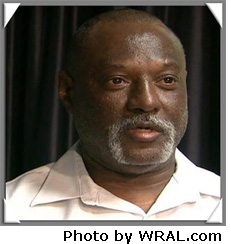 If the state of North Carolina had its way, Jones, 49, would have been strapped to a gurney years ago, hooked to an IV and pumped full of a lethal, three-drug cocktail until he asphyxiated.
Instead, on May 2, he walked out of prison a free man after spending 13 years on death row, and another 24 months locked up awaiting retrial -- all for a murder he almost certainly did not commit.
Jones -- known to friends and family as "Bo" -- was released with the help of the American Civil Liberties Union's (ACLU) Capital Punishment Project after the prosecution's star witness recanted her testimony against him. (Lovely Lorden, a former girlfriend, admitted she'd collected $4,000 in reward money in exchange for testifying against Jones.)[...]
The prosecution felt little obligation to question the veracity of Lorden's claim. And if the witness is to be believed today, investigators actually helped her keep her story straight.
As a result of Lorden's testimony -- and despite the lack of physical evidence tying him to the crime -- a jury convicted Jones in 1993 and he was sentenced to die for Grady's killing.
What Jones' attorneys didn't know at the time -- and, as it turns out, didn't really bother trying to uncover -- is that Lovely Lorden had made something of a career out of testifying against people close to her. By her own admission, she has aided law enforcement in dozens of investigations and says she helped police make cases against several other boyfriends, as well as her own brother and sons.
What's more, her work as a confidential informant didn't stop after Jones was sent to death row. Jones' attorneys sent In These Times copies of receipts that show Lorden was paid money at least seven times for her work as a confidential informant from December 2003 to April 2004, while Jones sat in jail.
Today, Lorden contends she testified against Jones under pressure from the police, in particular Dalton Jones (no relation), the lead officer in the case.[...]
Unfortunately, the case of Levon Jones is not an anomaly. He is the fifth death row prisoner to be exonerated in the past year. Since December, North Carolina alone has released three inmates from death row after it was determined that they did not commit the crimes for which they were convicted. Of these three men, two, including Jones, were convicted on the false testimony of snitches.[...]
Unfortunately this article is way to long to quote all of it in here but I would really recommend to read all of this really interesting, informing and educating article at alternet.org
Please also read the answer of Ron Keine - an exoneree himself - to this article which I posted as a comment to this post
Thursday, August 07, 2008
Tommy Arthur - The fight is not over yet
Thanks to all of you who responded to last week's call to action in the case of death row prisoner Tommy Arthur. Arthur came within 24 hours of being killed by the state of Alabama, despite strong evidence of his potential innocence. Thanks in part to the e-mails and phone calls of readers like you, his execution was delayed indefinitely. But the fight for justice is not over. Go here to urge the state of Alabama to pursue a DNA test of evidence in his case.
Viscerally, I support the death penalty. Rationally, I cannot.
The Death Penalty
Viscerally, I support the death penalty. Rationally, I cannot.
The Federalist Reason. In a democracy, the government's power comes from the people. Powers not conferred to the government are retained by the people. You'll note that every criminal action is styled "The State v. [Citizen]." When a people are considering what powers to confer to their government, they would be prudent to withhold from that government the power to kill the citizens, lest it be used unwisely. That power – the power to kill – should be reserved.
The Justice Reason. Our system is designed to let nineteen guilty go free rather than convict one innocent. But that is not its track record. Scores of people have been exonerated by DNA and other evidence, including many convicted of capital crimes. Think of that horror: the wrongly convicted facing death at the hands of his government while the actual killer is still at large preying on the public. But if you acknowledge the failings of the system, you have to feel at least some consternation about exacting the ultimate penalty, death.
The Legal and Moral Reason. What is murder? The intentional, premeditated taking of a human life without justification. That the death penalty constitutes the intentional and premeditated taking of the accused's life is obvious. The question, then, is whether the taking of that life is with or without justification. What is justification? A qualifying condition that makes what would otherwise be immoral conduct (murder) acceptable. In the real world, where you and I live, self defense can be a justification for killing another person. Self defense is not available to the government in the context of a death penalty execution. Revenge does not support a justification defense in the real world, although it might be considered in the penalty phase of a trial. Deterrence does not justify one citizen in killing another. Nor could a citizen claim a defense based on the popular wish that the person be killed. Simply put, no justification applies to the government's execution of the accused. The government's execution is simple murder, the premeditated and intentional taking of a human life without legal or moral justification.
The Cost. Ah, if only we were in Stalin's Russia or Mao's China. A short trial, bereft of due process and justice, and a simple bullet to the head for execution. In our country, we have rights of due process and habeas corpus; people who study history and know of the atrocities governments have wrought on their own citizens hold those rights dear. But with those rights come costs, and when you seek to execute the accused, the costs are extreme. Further, imprisonment on death row is geometrically more expensive than in the general population. The death penalty is a false economy, if you were hoping the dismal science would support any argument for the death penalty. And when you are discussing the taking of a human life, bringing up the economics of the situation is distasteful. Decisions based on economics are divorced from the concerns of morality and justice that should drive policy on this matter.
A Broader Perspective. Most countries and many states in the United States have abolished the death penalty. And they are not overrun with murder and depravity. The idea that the death penalty is holding back a crime wave or murder spree is refuted by the facts on the ground. In fact, if Texas is any indicator, the death penalty is at best non-correlative to violent crime; at worst, it has a positive correlation.
The Victim's Perspective. I respect the sentiment that anyone must have upon the loss of a loved one to a murderer. If I suffered such a loss and knew the killer's identity, I doubt that I could restrain myself from exacting the death penalty personally. But revenge is not part of the grieving process. Frankly, the victim's loved ones are the least likely source for dispassionate consideration of this issue. That the victim's son, for instance, might want the murderer killed is hardly surprising and understandable, but not very helpful towards setting policy.
Most people reach their views on this subject viscerally. I understand that, but policy should be set by people thinking rationally. Think of what our country's ideals are, or should be. Do we seek justice? What justice is there in exacting the ultimate sanction when our system of justice is imperfect? Do we seek peace? What peace is there in taking another life? Do we seek truth? What truth is found in another death?
Odyssey
Taken from the blog Law Odyssey.
The author of this post is a trail lawyer in Houston, TX.
Viscerally, I support the death penalty. Rationally, I cannot.
The Federalist Reason. In a democracy, the government's power comes from the people. Powers not conferred to the government are retained by the people. You'll note that every criminal action is styled "The State v. [Citizen]." When a people are considering what powers to confer to their government, they would be prudent to withhold from that government the power to kill the citizens, lest it be used unwisely. That power – the power to kill – should be reserved.
The Justice Reason. Our system is designed to let nineteen guilty go free rather than convict one innocent. But that is not its track record. Scores of people have been exonerated by DNA and other evidence, including many convicted of capital crimes. Think of that horror: the wrongly convicted facing death at the hands of his government while the actual killer is still at large preying on the public. But if you acknowledge the failings of the system, you have to feel at least some consternation about exacting the ultimate penalty, death.
The Legal and Moral Reason. What is murder? The intentional, premeditated taking of a human life without justification. That the death penalty constitutes the intentional and premeditated taking of the accused's life is obvious. The question, then, is whether the taking of that life is with or without justification. What is justification? A qualifying condition that makes what would otherwise be immoral conduct (murder) acceptable. In the real world, where you and I live, self defense can be a justification for killing another person. Self defense is not available to the government in the context of a death penalty execution. Revenge does not support a justification defense in the real world, although it might be considered in the penalty phase of a trial. Deterrence does not justify one citizen in killing another. Nor could a citizen claim a defense based on the popular wish that the person be killed. Simply put, no justification applies to the government's execution of the accused. The government's execution is simple murder, the premeditated and intentional taking of a human life without legal or moral justification.
The Cost. Ah, if only we were in Stalin's Russia or Mao's China. A short trial, bereft of due process and justice, and a simple bullet to the head for execution. In our country, we have rights of due process and habeas corpus; people who study history and know of the atrocities governments have wrought on their own citizens hold those rights dear. But with those rights come costs, and when you seek to execute the accused, the costs are extreme. Further, imprisonment on death row is geometrically more expensive than in the general population. The death penalty is a false economy, if you were hoping the dismal science would support any argument for the death penalty. And when you are discussing the taking of a human life, bringing up the economics of the situation is distasteful. Decisions based on economics are divorced from the concerns of morality and justice that should drive policy on this matter.
A Broader Perspective. Most countries and many states in the United States have abolished the death penalty. And they are not overrun with murder and depravity. The idea that the death penalty is holding back a crime wave or murder spree is refuted by the facts on the ground. In fact, if Texas is any indicator, the death penalty is at best non-correlative to violent crime; at worst, it has a positive correlation.
The Victim's Perspective. I respect the sentiment that anyone must have upon the loss of a loved one to a murderer. If I suffered such a loss and knew the killer's identity, I doubt that I could restrain myself from exacting the death penalty personally. But revenge is not part of the grieving process. Frankly, the victim's loved ones are the least likely source for dispassionate consideration of this issue. That the victim's son, for instance, might want the murderer killed is hardly surprising and understandable, but not very helpful towards setting policy.
Most people reach their views on this subject viscerally. I understand that, but policy should be set by people thinking rationally. Think of what our country's ideals are, or should be. Do we seek justice? What justice is there in exacting the ultimate sanction when our system of justice is imperfect? Do we seek peace? What peace is there in taking another life? Do we seek truth? What truth is found in another death?
Odyssey
Taken from the blog Law Odyssey.
The author of this post is a trail lawyer in Houston, TX.
Wednesday, August 06, 2008
Tuesday, August 05, 2008
Last action for Jose Medellin
we are asking you to take part in this last action to save the life of Jose Medellin, whose execution is going to take place in almost 24 hours.
Please click on this link where you can contact Governor Perry and ask him to spare Jose's life.
You are asked to choose an option in the "Issue" field: select "execution - offender specific". In the comments field just put a brief sentence mentioning Jose Medellin and asking the Governor to grant him a stay and spare his life or whatever passes through your mind.
Thank you to all who will help! Please pass this along to as many people as you can!
Please click on this link where you can contact Governor Perry and ask him to spare Jose's life.
You are asked to choose an option in the "Issue" field: select "execution - offender specific". In the comments field just put a brief sentence mentioning Jose Medellin and asking the Governor to grant him a stay and spare his life or whatever passes through your mind.
Thank you to all who will help! Please pass this along to as many people as you can!
Journey of Hope: Montana
Temporary Note: We hope to have a photo for Jennifer and/or other Montana folk here soon--also a little more on the Montana Journey so please keep coming back! (Connie)
Jennifer Kirby is the Coordinator for the Montana Abolition Coalition. She will be the lead organizer for the Montana Journey of Hope. Jennifer is very excited about the Journey coming to Montana and hopeful that the outcome will be abolition of the death penalty in her state. The Journey of Hope...from Violence to Healing is very grateful to Jennifer and MAC for inviting the Journey to Montana. I met Jennifer in San Jose, California during the National Coalition Conference to Abolish the Death Penalty in January. Marietta Jaeger Lane introduced us. Marietta is on the board of directors of MAC and she is also a newly elected board member of the Journey of Hope. Marietta is also one of the five Journey of Hope co-founders.
Jennifer has written the following piece for the Montana Journey. Please feel free to copy it and post it to any list you may have.
Peace,
Bill
From Jennifer...
In 2007, Montana made history when the Montana Senate voted to abolish the death penalty and replace it with life without the possibility of parole. Though the bill failed by a single vote in the House Committee, the success in the legislature showed that we are on the verge of victory. The Montana Abolition Coalition is seizing the opportunity and the momentum to abolish the death penalty in the 2009 legislative session.
The Montana Abolition Coalition is a broad based group of organizations and individuals committed to ending the death penalty in Montana. The Coalition includes faith groups, civil rights organizations, and murder victims’ families groups. The groups differ in their reasons, but all agree on the need to end capital punishment.
The Coalition recognizes the need to bring together murder victim family members, exonerees and death row families and have them share their stories with the public.
So that is why the Coalition has invited Journey of Hope to Montana. We hope the Journey will change minds and help expand the support for abolition. We know that the speakers have the power to win us votes in the legislature. The Coalition has determined a number of legislative districts that are key to winning in the next legislative session. These will be focused on during the Journey by having a number of venues in those districts and arranging for legislators and legislative candidates to attend Journey events. By having the Journey work in the targeted legislative districts, we will build grassroots support for abolition in these key areas. So in the 2009 session, we will have a strong organized group of constituents that will help move legislators to vote their conscience and end capital punishment in our state.
The Journey will take place October 2nd through October 11th, 2008. Events will be held throughout the state in a wide variety of venues.
Montana made national headlines in 2007 with the State Senate’s vote to end capital punishment. Today, abolition is closer than ever. With the help of Journey of Hope, we can have victory in 2009!
Jennifer Kirby
Coordinator, Montana Abolition Coalition
406-461-8176
jenk@aclumontana.org
jenk@mtabolitionco.org
Jennifer Kirby is the Coordinator for the Montana Abolition Coalition. She will be the lead organizer for the Montana Journey of Hope. Jennifer is very excited about the Journey coming to Montana and hopeful that the outcome will be abolition of the death penalty in her state. The Journey of Hope...from Violence to Healing is very grateful to Jennifer and MAC for inviting the Journey to Montana. I met Jennifer in San Jose, California during the National Coalition Conference to Abolish the Death Penalty in January. Marietta Jaeger Lane introduced us. Marietta is on the board of directors of MAC and she is also a newly elected board member of the Journey of Hope. Marietta is also one of the five Journey of Hope co-founders.
Jennifer has written the following piece for the Montana Journey. Please feel free to copy it and post it to any list you may have.
Peace,
Bill
From Jennifer...
In 2007, Montana made history when the Montana Senate voted to abolish the death penalty and replace it with life without the possibility of parole. Though the bill failed by a single vote in the House Committee, the success in the legislature showed that we are on the verge of victory. The Montana Abolition Coalition is seizing the opportunity and the momentum to abolish the death penalty in the 2009 legislative session.
The Montana Abolition Coalition is a broad based group of organizations and individuals committed to ending the death penalty in Montana. The Coalition includes faith groups, civil rights organizations, and murder victims’ families groups. The groups differ in their reasons, but all agree on the need to end capital punishment.
The Coalition recognizes the need to bring together murder victim family members, exonerees and death row families and have them share their stories with the public.
So that is why the Coalition has invited Journey of Hope to Montana. We hope the Journey will change minds and help expand the support for abolition. We know that the speakers have the power to win us votes in the legislature. The Coalition has determined a number of legislative districts that are key to winning in the next legislative session. These will be focused on during the Journey by having a number of venues in those districts and arranging for legislators and legislative candidates to attend Journey events. By having the Journey work in the targeted legislative districts, we will build grassroots support for abolition in these key areas. So in the 2009 session, we will have a strong organized group of constituents that will help move legislators to vote their conscience and end capital punishment in our state.
The Journey will take place October 2nd through October 11th, 2008. Events will be held throughout the state in a wide variety of venues.
Montana made national headlines in 2007 with the State Senate’s vote to end capital punishment. Today, abolition is closer than ever. With the help of Journey of Hope, we can have victory in 2009!
Jennifer Kirby
Coordinator, Montana Abolition Coalition
406-461-8176
jenk@aclumontana.org
jenk@mtabolitionco.org
Sunday, August 03, 2008
International Forgiveness Day
Today is the International Forgiveness Day 2008. When I was first reading about this, I had mixed feelings:
- Shouldn't we forgive each day of the year?
- On the other hand: it might be good to just remind people on the power of forgiveness every so often and we have things like Mother's Day, Father's Day etc. as well
I believe it's a good subject to at least think about a bit and the website of Worldwide Forgiveness Alliance offers some first points for this at the least. So I started to do some thinking myself and also asked a friend about her thoughts - read them for yourself, please and let me know what YOU think about the International Forgiveness day!
Susanne
When Susanne asked me to write a few lines on the subject of "Forgiveness-Day" I didn't imagine what I agreed to.
Now I've been sitting her for hours, remembering, considering, trying to tell what it is in my eyes, in my life. So, those are some of my ideas around the subject:
Forgiveness doesn't mean to forget, become friends and live a life in love and peace...
I think it's more like making a new start. Don't try to change the facts of the past. (Or even: Try to stop doing so.) Acknowledge them to be true. Don't bargain about the importance of those facts for you. If they did violate you, they did. Accept that they did, anything further depends on accepting the truth. It won't ever help you to deny.
But what about the feelings of hatred and the burning long for revenge?
I'm sure that hatred and revenge never do any good, to nobody, not the one who feels or seeks them, not the one who is a target to them. (You know the saying: "What is the good in killing people to show people that killing is wrong?")
Reduced to its point I think hatred is rejecting evil. So reject evil and let it be rejected. Don't keep being concerned all the days of your life. Maybe rejecting will take you more than once to do - do it as often as you need to get rid of that evil damaging you. (Don't get me wrong: It might go on hurting for a long time, but that's not meant by further damage.)
In a simple form, rejecting is just to say "no". Sure, it won't be enough to say "no" in a situation, when your most loved one has been killed. It shouldn't have happened, of course, but it did. Accepting that truth hill help you to go on living.
Once I had to overcome a similar loss and grief. So I'm telling to let you know that I know what I'm talking about.
Two days before my dearest friend was killed we were talking about how to make a will. Both we were aged 24 and didn't possess anything worth to make a will for. It was only the idea of helping the left-behind to continue. My friend Barbara insisted in asking her family and friends to forgive in case of murder or homicide or something like that. That was her inheritance, I had to tell her family.
Justice isn't really a comfort to the grieving. It's got its value in keeping society together. But I'm convinced that justice as revenge is no good to anyone, it's just an illusion.
Life will never be the same after a crime - done or suffered. The past is gone, leaving behind a lot of destruction. But try to make a new start. Give your violated and handicapped life the chance to go on and maybe to change some day.
Some people are even capable to look in the criminal's eyes and not act out of hatred, no matter about their real feelings. There is a difference between the evil that has been done (what can't be changed) and the evil that is going to be done by active hatred in revenge. It is possible to stop it.
Now I'm 48. I didn't forget and I never will. How could I? A great part of my own life has been destroyed. But I had to go through it, gather the pieces together, make "the best of it", start again, live now, not only in the past, not allowing the past to poison my life and the lives of the ones who did what they did to Barbara, to me and to themselves.
So, if you managed to keep on reading until now and you're calling that preyching on a Sunday morning - you may be right. I was just preaching to myself. You've only read my thoughts about "Forgiveness-Day".
Christiane
- Shouldn't we forgive each day of the year?
- On the other hand: it might be good to just remind people on the power of forgiveness every so often and we have things like Mother's Day, Father's Day etc. as well
I believe it's a good subject to at least think about a bit and the website of Worldwide Forgiveness Alliance offers some first points for this at the least. So I started to do some thinking myself and also asked a friend about her thoughts - read them for yourself, please and let me know what YOU think about the International Forgiveness day!
Susanne
When Susanne asked me to write a few lines on the subject of "Forgiveness-Day" I didn't imagine what I agreed to.
Now I've been sitting her for hours, remembering, considering, trying to tell what it is in my eyes, in my life. So, those are some of my ideas around the subject:
Forgiveness doesn't mean to forget, become friends and live a life in love and peace...
I think it's more like making a new start. Don't try to change the facts of the past. (Or even: Try to stop doing so.) Acknowledge them to be true. Don't bargain about the importance of those facts for you. If they did violate you, they did. Accept that they did, anything further depends on accepting the truth. It won't ever help you to deny.
But what about the feelings of hatred and the burning long for revenge?
I'm sure that hatred and revenge never do any good, to nobody, not the one who feels or seeks them, not the one who is a target to them. (You know the saying: "What is the good in killing people to show people that killing is wrong?")
Reduced to its point I think hatred is rejecting evil. So reject evil and let it be rejected. Don't keep being concerned all the days of your life. Maybe rejecting will take you more than once to do - do it as often as you need to get rid of that evil damaging you. (Don't get me wrong: It might go on hurting for a long time, but that's not meant by further damage.)
In a simple form, rejecting is just to say "no". Sure, it won't be enough to say "no" in a situation, when your most loved one has been killed. It shouldn't have happened, of course, but it did. Accepting that truth hill help you to go on living.
Once I had to overcome a similar loss and grief. So I'm telling to let you know that I know what I'm talking about.
Two days before my dearest friend was killed we were talking about how to make a will. Both we were aged 24 and didn't possess anything worth to make a will for. It was only the idea of helping the left-behind to continue. My friend Barbara insisted in asking her family and friends to forgive in case of murder or homicide or something like that. That was her inheritance, I had to tell her family.
Justice isn't really a comfort to the grieving. It's got its value in keeping society together. But I'm convinced that justice as revenge is no good to anyone, it's just an illusion.
Life will never be the same after a crime - done or suffered. The past is gone, leaving behind a lot of destruction. But try to make a new start. Give your violated and handicapped life the chance to go on and maybe to change some day.
Some people are even capable to look in the criminal's eyes and not act out of hatred, no matter about their real feelings. There is a difference between the evil that has been done (what can't be changed) and the evil that is going to be done by active hatred in revenge. It is possible to stop it.
Now I'm 48. I didn't forget and I never will. How could I? A great part of my own life has been destroyed. But I had to go through it, gather the pieces together, make "the best of it", start again, live now, not only in the past, not allowing the past to poison my life and the lives of the ones who did what they did to Barbara, to me and to themselves.
So, if you managed to keep on reading until now and you're calling that preyching on a Sunday morning - you may be right. I was just preaching to myself. You've only read my thoughts about "Forgiveness-Day".
Christiane
Saturday, August 02, 2008
A little more about Mike Farrell
Just a quick mention of Mike's book -Just Call Me Mike-
Here's what one legal expert has to say about the book:
" Mike Farrell proves that ferocious conviction is the organizing principle of an extraordinary life. In his memoir, Just Call Me Mike, Mike describes the fantastic, sometimes painful, and ultimately redeeming journey that his conscience has led him on. Like his life, the book dances seamlessly between his great passions--from fond memories on the M*A*S*H set, to nervous moments at military checkpoints on his way to help refugees in war-torn Central America, to scrubbing-in to real-life surgery on a prisoner of war in El Salvador. In a disarmingly honest and gentle voice, Just Call Me Mike collects an extraordinary diversity of experiences, so diverse that it's difficult to believe that one person could accomplish so much, in art and in service to others. "
--Kamala Harris, District Attorney of San Francisco
Short Bio:
Best known for his eight years on M*A*S*H and five seasons on “Providence,” actor Mike Farrell is also a writer, director and producer, his most recent project the motion picture “Patch Adams.”
A social and political activist, Farrell has served on human rights and peace delegations to El Salvador, Nicaragua, U.S.S.R., Paraguay, Chile, Israel, the Occupied Territories, Egypt, Jordan, Syria, Czechoslovakia, Somalia, Kenya, Croatia, Bosnia, Cuba, Rwanda, Zaire, Tanzania and Costa Rica.
He was co-chair of the Southern California Committee of Human Rights Watch from 1994 to 2004.
President of Death Penalty Focus since 1994, he has “visited too many death rows” and he speaks, debates, writes and coordinates efforts to stop executions across the country. (you can click on this site here under links on the right column.)
We can find a lot more available on the internet--Mike's blog, videos, speeches, etc.
Thanks Mike for ALL you are doing to connect with folk and help them and us connect with one another!
Here's what one legal expert has to say about the book:
" Mike Farrell proves that ferocious conviction is the organizing principle of an extraordinary life. In his memoir, Just Call Me Mike, Mike describes the fantastic, sometimes painful, and ultimately redeeming journey that his conscience has led him on. Like his life, the book dances seamlessly between his great passions--from fond memories on the M*A*S*H set, to nervous moments at military checkpoints on his way to help refugees in war-torn Central America, to scrubbing-in to real-life surgery on a prisoner of war in El Salvador. In a disarmingly honest and gentle voice, Just Call Me Mike collects an extraordinary diversity of experiences, so diverse that it's difficult to believe that one person could accomplish so much, in art and in service to others. "
--Kamala Harris, District Attorney of San Francisco
Short Bio:
Best known for his eight years on M*A*S*H and five seasons on “Providence,” actor Mike Farrell is also a writer, director and producer, his most recent project the motion picture “Patch Adams.”
A social and political activist, Farrell has served on human rights and peace delegations to El Salvador, Nicaragua, U.S.S.R., Paraguay, Chile, Israel, the Occupied Territories, Egypt, Jordan, Syria, Czechoslovakia, Somalia, Kenya, Croatia, Bosnia, Cuba, Rwanda, Zaire, Tanzania and Costa Rica.
He was co-chair of the Southern California Committee of Human Rights Watch from 1994 to 2004.
President of Death Penalty Focus since 1994, he has “visited too many death rows” and he speaks, debates, writes and coordinates efforts to stop executions across the country. (you can click on this site here under links on the right column.)
We can find a lot more available on the internet--Mike's blog, videos, speeches, etc.
Thanks Mike for ALL you are doing to connect with folk and help them and us connect with one another!
Friday, August 01, 2008
What's up with Mike?
 Mike is one of these rare abolitionists who connects need to abolish the death penalty with working across the human rights spectrum.
An Unlikely Pair Fight the Death Penalty: Mike Farrell and Calif. Judge
Don McCartin, former Marine (like Mike)--now retired "hanging judge"--and casual acquaintance from Mike's home haunts--same area of Calif)
McCartin, having sentenced nine men to death and then watched as the system examined, re-examined and finally overturned all of his convictions while executing none of them, now believes the death penalty is a hideously expensive fraud.
Excerpts from article below: (The Death Penalty) TORTURES THE LOVED ONES of murder victims by dragging them through the years of complex appeals required by the U.S. Supreme Court in an attempt to protect the innocent...stripping away the remaining shreds of one’s humanity and killing him while helpless and defenseless...called `justice’ by the leaders of our state and nation, a lesson is taught,” says Farrell. “Unfortunately, that lesson is being played out today, not only in our cities, but by young Americans in Guantanamo, Abu Ghraib, Bagram and `black sites’ run by the CIA across the world, again with the full authority and approval of those who pretend to leadership.”
See Full Article below
++++++++++++++++++++++
Donald A. McCartin and Mike Farrell
(Originally printed in the Los Angeles Daily News and reposted on Truth Dig.)
We are an unlikely pair—not “The Odd Couple,” but close. Forty-five years ago, one was a successful lawyer practicing in Orange County, the other an aspiring actor living there because his new wife taught at Laguna Beach High School.
The lawyer had lawsuits to handle, papers to be filed, people to be found, summonses and subpoenas to be served.
The actor, unable to count on work in show business, ran an attorney service that took care of the lawyer’s business.
Both former Marines, we thus knew each other, if casually, for years.
Two decades later, the lawyer, then a judge of the Superior Court, had sentenced more men to death than any other in his jurisdiction. He was known as “the hanging judge of Orange County.”
The actor had gotten lucky, becoming a member of the cast of “M*A*S*H,” one of the nation’s most beloved TV shows, and was an ardent and outspoken opponent of the death penalty.
Today, while coming at it from vastly different perspectives, the now-retired “hanging judge” and the actor, who chairs Death Penalty Focus, find themselves working together again, this time to close California’s death chamber.
Don McCartin, having sentenced nine men to death and then watched as the system examined, re-examined and finally overturned all of his convictions while executing none of them, now believes the death penalty is a hideously expensive fraud. It tortures the loved ones of murder victims by dragging them through the years of complex appeals required by the U.S. Supreme Court in an attempt to protect the innocent.
He’s aware of the constitutional dilemma created by the tension between the need to protect the rights of the accused in a death case and the desire for some form of justice to be done. But he’s outraged that the mother of Robin Samsoe, a 12-year-old girl raped and murdered in 1979, is now required to sit through yet a third trial of the alleged killer almost 30 years later. A sentence of life without parole would have allowed her to go on with her own life so long ago.
Mike Farrell, having seen the harm done by this same system—both to the innocent caught in it, sentenced to death and sometimes executed, as well as to the prosecutors, defense attorneys, investigators, judges, juries, guards, chaplains, killing teams and executioners tainted by it—believes our entire society is harmed by the dehumanization process inherent in state killing.
“When stripping away the remaining shreds of one’s humanity and killing him while helpless and defenseless is called `justice’ by the leaders of our state and nation, a lesson is taught,” says Farrell. “Unfortunately, that lesson is being played out today, not only in our cities, but by young Americans in Guantanamo, Abu Ghraib, Bagram and `black sites’ run by the CIA across the world, again with the full authority and approval of those who pretend to leadership.”
After 45 years, we—the judge and the actor, first business associates, then adversaries—now call on Gov. Arnold Schwarzenegger and the state Legislature to heed the findings of California’s Commission on the Fair Administration of Justice after its two-year examination. We ask them to bring an end to the wasteful, hypocritical, demeaning exercise of capital punishment, and replace it with the safer, cheaper, fairer sentence of permanent imprisonment.
Donald A. McCartin is a retired judge of the Orange County (Calif.) Superior Court. Mike Farrell is president of Death Penalty Focus and author of “Just Call Me Mike: A Journey to Actor and Activist.”
McCartin, having sentenced nine men to death and then watched as the system examined, re-examined and finally overturned all of his convictions while executing none of them, now believes the death penalty is a hideously expensive fraud.
Excerpts from article below: (The Death Penalty) TORTURES THE LOVED ONES of murder victims by dragging them through the years of complex appeals required by the U.S. Supreme Court in an attempt to protect the innocent...stripping away the remaining shreds of one’s humanity and killing him while helpless and defenseless...called `justice’ by the leaders of our state and nation, a lesson is taught,” says Farrell. “Unfortunately, that lesson is being played out today, not only in our cities, but by young Americans in Guantanamo, Abu Ghraib, Bagram and `black sites’ run by the CIA across the world, again with the full authority and approval of those who pretend to leadership.”
See Full Article below
++++++++++++++++++++++
Donald A. McCartin and Mike Farrell
(Originally printed in the Los Angeles Daily News and reposted on Truth Dig.)
We are an unlikely pair—not “The Odd Couple,” but close. Forty-five years ago, one was a successful lawyer practicing in Orange County, the other an aspiring actor living there because his new wife taught at Laguna Beach High School.
The lawyer had lawsuits to handle, papers to be filed, people to be found, summonses and subpoenas to be served.
The actor, unable to count on work in show business, ran an attorney service that took care of the lawyer’s business.
Both former Marines, we thus knew each other, if casually, for years.
Two decades later, the lawyer, then a judge of the Superior Court, had sentenced more men to death than any other in his jurisdiction. He was known as “the hanging judge of Orange County.”
The actor had gotten lucky, becoming a member of the cast of “M*A*S*H,” one of the nation’s most beloved TV shows, and was an ardent and outspoken opponent of the death penalty.
Today, while coming at it from vastly different perspectives, the now-retired “hanging judge” and the actor, who chairs Death Penalty Focus, find themselves working together again, this time to close California’s death chamber.
Don McCartin, having sentenced nine men to death and then watched as the system examined, re-examined and finally overturned all of his convictions while executing none of them, now believes the death penalty is a hideously expensive fraud. It tortures the loved ones of murder victims by dragging them through the years of complex appeals required by the U.S. Supreme Court in an attempt to protect the innocent.
He’s aware of the constitutional dilemma created by the tension between the need to protect the rights of the accused in a death case and the desire for some form of justice to be done. But he’s outraged that the mother of Robin Samsoe, a 12-year-old girl raped and murdered in 1979, is now required to sit through yet a third trial of the alleged killer almost 30 years later. A sentence of life without parole would have allowed her to go on with her own life so long ago.
Mike Farrell, having seen the harm done by this same system—both to the innocent caught in it, sentenced to death and sometimes executed, as well as to the prosecutors, defense attorneys, investigators, judges, juries, guards, chaplains, killing teams and executioners tainted by it—believes our entire society is harmed by the dehumanization process inherent in state killing.
“When stripping away the remaining shreds of one’s humanity and killing him while helpless and defenseless is called `justice’ by the leaders of our state and nation, a lesson is taught,” says Farrell. “Unfortunately, that lesson is being played out today, not only in our cities, but by young Americans in Guantanamo, Abu Ghraib, Bagram and `black sites’ run by the CIA across the world, again with the full authority and approval of those who pretend to leadership.”
After 45 years, we—the judge and the actor, first business associates, then adversaries—now call on Gov. Arnold Schwarzenegger and the state Legislature to heed the findings of California’s Commission on the Fair Administration of Justice after its two-year examination. We ask them to bring an end to the wasteful, hypocritical, demeaning exercise of capital punishment, and replace it with the safer, cheaper, fairer sentence of permanent imprisonment.
Donald A. McCartin is a retired judge of the Orange County (Calif.) Superior Court. Mike Farrell is president of Death Penalty Focus and author of “Just Call Me Mike: A Journey to Actor and Activist.”
Subscribe to:
Posts (Atom)